FIELD NOTES: APRIL 2026

Executive Director’s Note:


Earth Month offers us an opportunity to celebrate and reflect on the beauty of our awe-inspiring, surprising, and intricately interconnected living world. In today’s tumult of deepening global conflicts and growing uncertainties, I find Earth Month’s invitation to protect and honor the life, landscapes, and processes that sustain and connect us more critical and urgent than ever.


Celebrate Earth Month with Cascade Forest Conservancy


Keep reading this month’s newsletter to discover ways you can celebrate Earth Month with CFC. From taking steps to protect the Roadless Areas, supporting effective environmental advocacy, or signing up to attend upcoming events, there are many ways to get involved and make a difference for the places you care about!


NEWS & UPDATES:


Roadless Rule Update: Communities Are Coming Together to Protect Roadless Areas

Officials in D.C. are working to rescind the Roadless Area Conservation Rule, which currently protects 30% of national forest lands, effectively safeguarding more intact wildlife habitat and backcountry than any other rule or law besides the Wilderness Act.

When the Roadless Rule was put in place in 2001, federal officials held more than 600 public meetings to provide impacted communities opportunities to voice their opinions. The officials working to repeal it have not held even one.

Current USFS leadership seem intent on implementing sweeping and unpopular changes with little or no public participation. We’re not letting that happen.

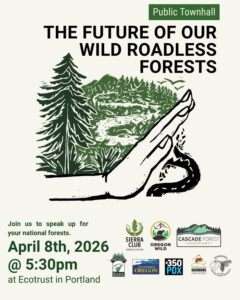
Last week, CFC and several partner organizations held our own public hearing in Portland, OR. We were joined by US Representative Andrea Salinas and nearly 100 individuals—many of whom took a turn to speak about why continuing protections for Roadless Areas matter to them.

Other opportunities to speak for the Roadless Rule

Despite the current administration’s efforts to tamp down and ignore public opinion, our voices still carry the power to effect policy for the better. As recently as last year, mass outcry helped put a stop to D.C. officials’ attempt to sell of large chunks of public lands. With the Roadless Area Conservation Rule now at risk, we need to show up once again and speak out in numbers so that our representatives, agency staff, and leadership know that the public values our remaining wild places and the rules that protect them!


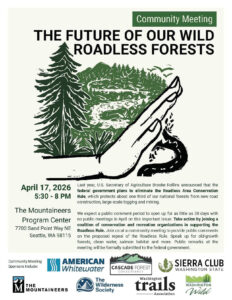
  • An additional Public Town hall will be held on April 17th in Seattle. Learn more and sign up to speak here.
  • In the near future, the Forest Service will open an official public comment period where you can go on record opposing the plan to remove roadless protections. We are expecting a very short comment period, so we are giving you a heads up now so you are ready to act when the time comes. It’s critical we show as much opposition as possible. Stay tuned and follow CFC on social media to learn when and how to participate in the upcoming public comment period.


Did Trump Really Dismantle the Forest Service? No. Here is What’s Really Going On.


In the last few weeks, certain online spaces have been flooded with inaccurate or misleading stories with alarming headlines claiming that the Trump Administration had ordered the dismantling of the US Forest Service.

The US Forest Service is not being dismantled, but it is undergoing a massive reorganization.

What changes are part of the USFS reorganization?

  • The agency’s headquarters is being moved from Washington, D.C., to Salt Lake City.
  • The agency’s 9 regional offices, which oversee individual national forests and provide administrative and technical support, will be closed and replaced with 15 State Offices that will oversee forests in their state(s) and a national network of Operation Service Centers that will provide shared administrative and technical support.
  • A majority (over 70%) of research and development facilities will be shuttered.

Although the agency isn’t going away, the reorganization does raise important questions—most critically: will this action strengthen or weaken the Forest Service, and how will our ability to ensure public lands are managed in the public interest be affected?

While it is too soon to say with certainty how all this will impact national forest lands in southwest Washington, Cascade Forest Conservancy (CFC) is concerned that many elements of this reorganization will be detrimental.

We agree with the overwhelming majority of comments submitted previously opposing the move. As noted in a US Department of Agriculture summary of public comments, there are broad concerns that relocating Forest Service staff “could compromise ecological management, public access, and employee morale.”

A loss of local researchers, local leadership, local knowledge, and relationships built with Tribal governments over the years may all negatively impact land management actions in our region. CFC is keeping a close watch on these changes and will continue to advocate for ecologically sound policies as their effects become clearer in the coming months.


READ MORE


Cascade Forest Conservancy is Headed to D.C. in May


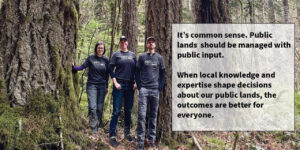
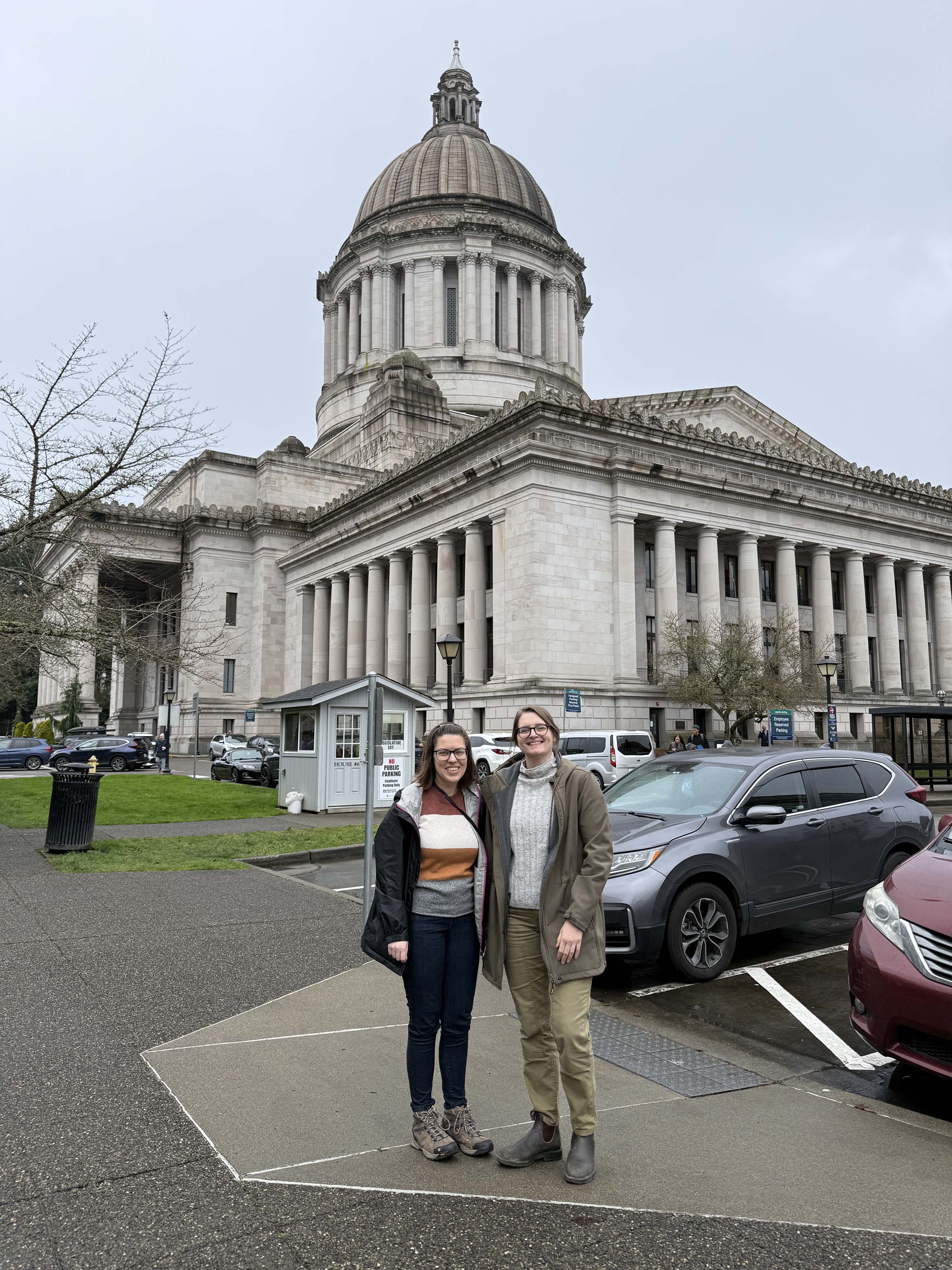
Next month, CFC’s Executive Director, Policy Manager, and Director of Programs are headed to our nation’s capital with a simple message for elected officials and agency leaders: public lands must be managed with robust public input. We think that’s common sense. When the voices of the people who know their region best shape how our public lands are cared for, the outcomes are better for everyone.

It’s a message that we think needs to be heard now more than ever. The current administration has been systematically dismantling the public’s ability to effectively influence decision-making while routinely ignoring the input they do receive.

Help us make sure our message is heard by picking up your own “PUBLIC LANDS, PUBLIC INPUT” t-shirt today. All sales will support our upcoming trip and help us have important conversations with federal decision-makers.

ORDER YOUR T-SHIRT HERE


CFC staff shared knowledge and strengthened partnerships at the Seas to Summits Annual Conference


In early April, CFC’s Director of Programs, Shiloh Halsey, and Science & Stewardship Manager, Amanda Keasberry, attended the Seas to Summits Annual Conference, hosted by the Washington Chapter of The Wildlife Society and the WA-BC Chapter of American Fisheries Society in Wenatchee, WA.

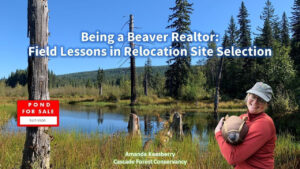
Both Shiloh and Amanda presented at the conference: Amanda spoke in the Beaver Restoration session, hosted by partners at the University of Washington, Vancouver, sharing insights from conducting hundreds of beaver habitat site assessments to identify relocation opportunities, while Shiloh presented in the Aquatic and Riparian Restoration session on partnerships and wood sourcing for the Instream Wood Bank. The conference provided a valuable opportunity to connect with others in the region doing similar work, share what we’ve been working on, and learn from the many groups advancing fish and wildlife conservation.


UPCOMMING EVENTS:


Get Early Bird Tickets to the UNDERSTORY NW FILM FEST
Thursday, May 28th, 6:30 pm
The Kiggins Theatre


We’ve got an exciting lineup of films selected for this year’s Understory NW Film Fest, coming to Vancouver’s historic Kiggins Theater on Thursday, May 28th.

See stories celebrating the natural world and the people working to protect it while helping Cascade Forest Conservancy raise funds to support ongoing conservation work in the heart of the Cascades.

Visit the link below to preview this year’s selections and save on tickets by taking advantage of our early-bird pricing until May 14.


Celebrate Nature’s Best Wetlands Engineers at the First Annual Washougal Beaver Bash

Saturday, April 18th, 10:00 am – 2:00 pm
Reflection Plaza in Washougal


Get ready to celebrate International Beaver Day in Washougal!

The Washougal Beaver Bash is a collaboration between Cascade Forest Conservancy, Good Year Farms, and the Washougal Arts & Culture Alliance, featuring speakers and exhibitors from the Chinook Indian Nation, the Cowlitz Indian Tribe, Project Beaver, and music performances from the Washougal High School Jazz Band and local singer Breanna Larsen.

Come enjoy a free, family-friendly event featuring art projects, live music, and exhibitor booths with beaver experts ready to share “gnaw-ledge” about our favorite ecosystem engineers!

FIELD NOTES: March 2026

Executive Director’s Note:


It’s common sense: good public land management involves robust public input.

When the voices of the people who know, love, and care for our public lands are heard, stewardship actions achieve better outcomes for everyone. But when decision-makers ignore the knowledge held by local communities, actions impacting public lands can cause unnecessary ecological harm or become bogged down in expensive, time-consuming litigation.

Cascade Forest Conservancy and our partners are committed to preserving your right to have a say in what happens to your public lands. We think it’s common sense. Unfortunately, the D.C. officials working to reverse the Roadless Conservation Rule don’t appear to share our conviction. Before the Rule was put into place 25 years ago, the US Forest Service held more than 600 public meetings. Shockingly, the process to repeal it may not include a single one. The Cascade Forest Conservancy and our partners will not let that happen.

This is not how these processes are meant to work when the changes being considered are of this scope and magnitude. The future of the Roadless Rule will have a major impact on landscapes, wildlife, and communities across the Pacific Northwest and beyond. Excluding the Wilderness Act, no other rule or piece of legislation protects a greater amount of large intact wildlife habitat and backcountry from mining, logging, and other forms of development by limiting road building and timber harvest to limited circumstances.

The wild places protected by the Roadless Area Conservation Rule belong to all of us. We have a right to participate in discussions about how our public lands are used, and those managing them have a responsibility to seek our input. So if today’s Forest Service leadership won’t do its job, then we’ll do it for them.

In fact, we’ve already started. Now you can help too.

A coalition of national and local conservationists has organized public meetings across the Pacific Northwest and beyond.

Join us to speak for national forests.


In Portland, Oregon:

April 8th, 5:30-8:00 pm Ecotrust Building

(721 NW 9th Ave, Portland, OR 97209)

In Seattle, Washington:

April 17th. Details coming soon.


NEWS & UPDATES:


CFC Has Nominated the Upper Lewis River for Outstanding Resource Waters Status


Cascade Forest Conservancy, along with a coalition of conservation and recreation groups, has nominated the Upper Lewis River and three other waterways for Outstanding Resource Waters (ORW), a designation made by states that protects high-quality waterways from future degradation under the Clean Water Act. These types of state designations are particularly important these days, as they can help protect against rollbacks at the federal level, such as the rollback of the roadless conservation rule discussed above.

Why nominate the Upper Lewis River for Outstanding Resource Waters Status?

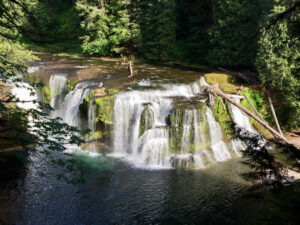
The watershed we nominated contains beautiful and high quality waterways that serve as valuable habitat for coho, steelhead, bull trout, and other species. This area is also a popular recreation destination for its scenic beauty, fishing opportunities, whitewater opportunities, hiking trails, and renowned waterfalls. The nominated area lies entirely within the Gifford Pinchot National Forest. Significant portions flow through designated Wilderness Areas, Inventoried Roadless Areas, and Late-Successional Reserves (parcels of national forests where the primary management objective is the protection and enhancement of mature and old-growth forest habitats).

Protecting the Upper Lewis River will have positive impacts beyond the areas included in our nomination. The EPA has identified this river as one of 12 primary thermal refugia in the Columbia River. This means that the cold waters flowing from the area we aim to protect play a major role in maintaining water conditions that support the survival of temperature-sensitive species throughout the lower Columbia basin.

What’s next?

Washington’s Department of Ecology is now reviewing our proposal. In the coming months, the agency will issue a determination on whether the Upper Lewis River meets one of the criteria for Outstanding Resource Water.

We are optimistic that Ecology will recognize the pristine character, unique recreational value, and ecological significance of this beautiful stretch of the Upper Lewis River and determine that it meets at least one ORW criteria. If they do, the agency will begin a robust public process involving public outreach, consulting with tribes and local governments, and a formal rule making process.

Our first ORW nomination resulted in a historic win, as sections of the Green River and three other waterways became Washington state’s first ever Outstanding Resource Waters in 2023. A strong showing of public support for the new protections was key to our success. We’ll keep you updated about developments and share upcoming ways you can help us protect the Upper Lewis River


Volunteers made a difference this March!


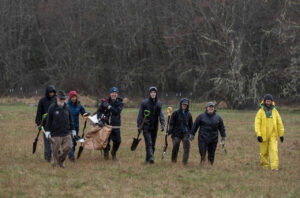
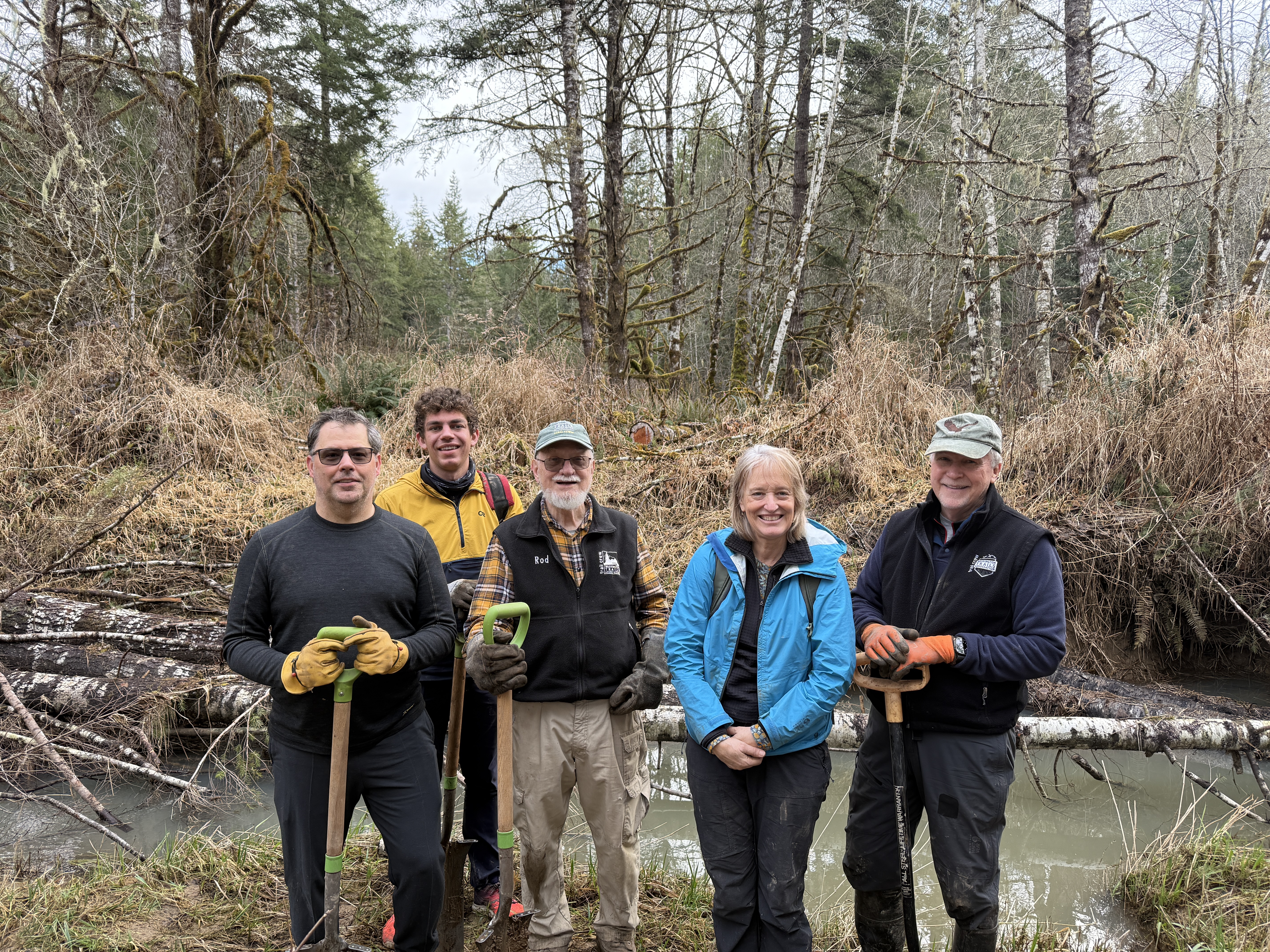
This month, a group of volunteers braved wet and rainy conditions to plant 250 trees along a stretch of Hall Creek, a tributary of the Cowlitz River. As they grow, the conifers and willows we planted will cool water temperatures and stabilize the streambanks—supporting salmon and other aquatic species.

The following weekend, 39(!!) volunteers joined us in the field to protect old-growth Douglas fir around Gifford Pinchot National Forest.

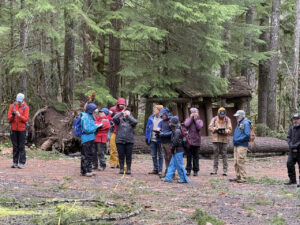
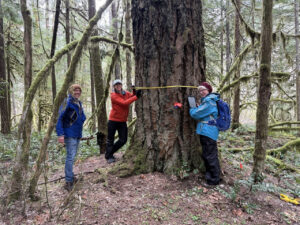
On Friday, we worked alongside the Forest Service to install MCH pheromone caps on trees in Iron Creek Campground. On Saturday, volunteers and Government Mineral Springs Cabin Association members placed MCH caps on trees around Trapper Creek and the historic Government Mineral Springs guard station. Finally, on Sunday, we inventoried trees at Panther Creek Campground and installed MCH caps on recently downed trees. The data we collected will help inform future protection efforts.

Thanks to everyone who came out to lend a hand!

Together, we planted hundreds of trees; installed over 500 MCH pheromone caps on 80 individual trees across three old-growth sites; and collected data on 151 trees.


UPCOMMING EVENTS:


Volunteer Opportunity:
Planting for Pollinators at Mt. Adams
Thursday, April 9


Help us create habitat for pollinators near Mt. Adams! Insect pollinators, such as bees, moths, and butterflies, survive on nectar and pollen collected from wildflowers and shrubs. Healthy plant communities support healthy pollinator communities and vice versa. For several years, CFC has been working with the Forest Service to improve plant and pollinator communities in an area that has experienced several wildfires in recent years in short succession.

We need your help to plant native seedlings. Our efforts will help plant communities recover more quickly in the burned area and provide more support for pollinators.


Save the Date: Washougal Beaver Bash is Coming April 18!


Get ready to celebrate International Beaver Day in Washougal!

The Washougal Beaver Bash will be a free, family-friendly event featuring art projects, live music, and exhibitor booths with beaver experts ready to share knowledge about our favorite ecosystem engineers!


The UNDERSTORY NW FILM FEST
Thursday, May 28


Mark your calendars for the return of our annual UNDERSTORY NW FILM FEST, a night of stories celebrating conservation and our connections to the world around us at Vancouver’s Historic Kiggins Theatre.

Details, trailer, and tickets coming soon!

FIELD NOTES: February 2026

Executive Director’s Note:

Despite overwhelming evidence and public opinion, the federal government is choosing to bury its head in the sand at a time when confronting and adapting to the realities of climate change is more important than ever.

Earlier this month, the administration repealed the 2009 Endangerment Finding, which classified climate change-causing greenhouse gases as pollutants, granting the EPA authority to regulate these emissions under the Clean Air Act. Repealing the finding fundamentally undermines the legal basis enabling the federal government to make rules and regulations to address climate change.

In addition to stripping the EPA of the ability to regulate CO2  and other greenhouse gases, the decision will likely lead to additional bad outcomes and may signal that other rollbacks are on the horizon, like a move away from climate-focused and science-based land management plans and undoing any recent progress that was made towards including consideration for carbon sequestration in timber sale negotiations.

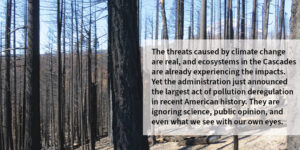
The decision to deregulate pollutants defies the threat and the reality of climate change and its impacts. The scientific consensus is even clearer in 2026 than it was in 2009 when the Endangerment Finding was put in place: greenhouse gas emissions and climate change are a serious threat to the health and well-being of all Americans.

In the Cascades, our snowpacks are at record lows. Droughts, mega fires, and atmospheric rivers have scarred our landscapes and harmed communities. In 2024 alone, weather and climate-change-related disasters cost the United States $27 billion. As more greenhouse gases accumulate in the atmosphere, the impacts and costs of climate change will continue to rise.


As the federal government shirks its responsibility to address climate change, Cascade Forest Conservancy continues to step up. Protected, healthy, and biodiverse forests in the Pacific Northwest slow climate change and mitigate its impacts. CFCs work to safeguard forests in our region—especially old-growth and mature stands that capture and store vast amounts of carbon—reduce the amount of greenhouse gases in the atmosphere, slowing the acceleration of climate change.

Additionally, our work to restore forest and aquatic habitats is easing climate change impacts by making ecosystems and communities in the southern Washington Cascades more resilient. Restoring salmon habitats, supporting beaver recovery, combating the spread of invasive species, restoring fire-impacted forests, and safeguarding old-growth Douglas firs from insect infestations are all making local ecosystems and the life they support healthier and better able to adapt to the challenges they are facing.

We cannot, nor will we, wait for those in power to accept their responsibility to address climate change. With you, our inspiring community of supporters, friends, partners, and volunteers, we will keep holding decision-makers accountable and protecting our forests.


    • Volunteer with CFC: Come make a difference out in the field! Many of our volunteer opportunities fill up fast. Be the first to know about new volunteer opportunities by adding your name and email to our volunteer update list.


    • Raise your voice: Your voice makes a difference when you use our talking points to submit commentscontact decision makers, or sign support letters. Stay tuned for action alerts, like the one below—and join us in speaking out for conservation and public lands.


    • Help us spread the word about the importance of roadless areas. The Gifford Pinchot National Forest is home to a number of Inventoried Roadless Areas, including the Dark Divide, Siouxon, and Silver Star Roadless Areas. Today, the rule that protects these strongholds of wildlife habitat and backcountry is under threat. We’re looking for spokespeople to help us in our outreach. Contact our Communications Manager, Bryn (bryn@cascadeforest.org) if you’d be willing to talk to us about your experiences in Inventoried Roadless Areas.


  • Support our work: Cascade Forest Conservancy is strong because of support from people like you. To help us prepare for the work ahead in 2026, make a donation of $6, $20, or $26 today.


NEWS & UPDATES:


The Department of Agriculture is again trying to curtail the public’s ability to meaningfully participate in decisions impacting federal lands..

Proposed changes would significantly limit the amount of time we have to comment on plans and decisions for timber sales and other land management projects managed by the US Forest Service and limit the amount and type of information we can include in public processes. 

Many of the Environmental Assessments, Environmental Impact Statements, and Decisions we comment on are complex in nature. Ground truthing and completing a detailed review of the ecological, legal, and practical impacts of land management plans (sometimes at a stand-by-stand level of detail) requires significant time and resources.

Accountability, local knowledge, careful review, and public feedback help the agency make better decisions. These changes are unacceptable and will lead to worse decision-making.

Please join us in fighting these changes by submitting a comment by March 9th. 


TAKE ACTION:

Write comments using CFC’s talking points using the link below, or comment directly on the federal registrar’s notice here.   

 Comment using CFC’s Talking Points


Field Season is Underway!

We kicked off the 2026 volunteer season with a restoration planting trip. Volunteers planted 200 trees at two sites along Salmon Creek, a tributary of the Cowlitz River. The western redcedar, Douglas fir, and big leaf maple they planted along the stream bank will increase habitat diversity and provide shade, which will help cool water temperatures. Since November, volunteers and Northwest Youth Corps members have planted over 1,000 trees at these sites!


CFC Staff Traveled to Olympia 

Our Policy Manager and Science and Stewardship Manager went to Olympia show support for Alexa Whipple and Dr. Jonah Piovia Scott, who spoke about the benefits of beavers and their intersection with humans at a Work Session during the Senate Agriculture and Natural Resources Committee hearing on Jan 29th.

While there, they met with Senator Annette Cleveland’s team and Representative Sharon Wylie, both of whom are in the 49th District. They spoke about:

    • Funding the Department of Natural Resources’ Wildfire Response, Forest Restoration, and Community Resilience Account (HB 1168), which plays a critical role in preparing communities for wildfire and broader climate impacts.


    • Funding the Trust Land Transfer (TLT) program to support additional projects from last session’s approved list. The TLT program helps DNR to transfer low-revenue lands to other ownership types, like habitat conservation, and replace them with new income-producing lands, a real win-win!


    • The importance of beavers and the role they play in supporting the health and function of watersheds, particularly for salmon recovery and climate resilience. We let them know about the Washington Beaver Working Group and how we are always working to make beaver management more effective and streamlined across the state, while working to protect beavers and their habitats. We also touched on the benefits of beavers in wildfire-prone areas.


Save the Date: Washougal Beaver Bash is Coming April 18!

Get ready to celebrate International Beaver Day in Washougal!

The Washougal Beaver Bash will be a free, family-friendly event featuring art projects, live music, and exhibitor booths with beaver experts ready to share knowledge about our favorite ecosystem engineers!

PROJECT UPDATE: INVASIVE SURVEYS IN TIMBER UNITS

Parts of the Gifford Pinchot National Forest and other national forests possess something increasingly rare in the western United States: forests and river corridors largely free of invasive plants. These places are important refuges for native plant communities, including many rare and threatened species. 

This is not something we should take for granted. As collaborators in the stewardship of this area, we feel a great sense of responsibility in doing what we can to help keep it this way. 

More and more, we are seeing formerly healthy native plant communities in the national forest succumb to aggressive invasive species like scotch broom, herb Robert, bull thistle, and others. Cascade Forest Conservancy, often with the help of our science and stewardship volunteers, have worked throughout the years to remove invasive species from sensitive habitats and conduct field mapping to record new outbreaks of invasive plants to share with partners and work collaboratively to keep further expansion at bay.


These efforts are important, but the best way to protect our local native ecosystems is to prevent outbreaks of invasive plant species before they happen.

Roads are known pathways for these introductions, but an under-discussed and increasingly impactful vector for invasive species are the logging machines that wind their way into previously intact forest stands. Too often, this results in outbreaks of invasive plant infestations that will be in these areas for perpetuity.

Cascade Forest Conservancy is working to address this threat on multiple fronts. 

In our role as watchdogs, we study and weigh in on the Forest Service’s plans for all timber sales and other management actions. We find that the introduction of invasive plants is often mentioned only in passing in Forest Service planning documents. While there are mitigation measures written into timber planning documents, such as stated requirements for equipment to be cleaned and checked for weed seeds, these protocols are insufficient to combat the scale of the problem or the seriousness of the threat to rare strongholds of local biodiversity.

Today, due to increased timber targets forced on land managers and a renewed rush to access new forest stands for logging, the integrity of native plant communities are at risk.


We continue to highlight these risks in formal comments on timber sales and in our conversations with Forest Service planners. More recently, we’ve launched an additional new effort to monitor recently logged forests for early signs of invasive plant establishment.

By detecting and treating infestations early, we aim to reduce long-term impacts and help protect these vulnerable ecosystems. We can sometimes treat these areas on the spot through hand-pulling; other times we share our findings with the Forest Service and the county weed treatment teams for more comprehensive treatment and, hopefully, continual monitoring. While this effort won’t stop all new infestations, it’s a meaningful step we can take, and one that we’re pursuing through volunteer trips that bring community members directly into these forests to assist with invasive plant surveys and control.

We continue to highlight these risks in formal comments on timber sales and in our conversations with Forest Service planners. More recently, we’ve launched an additional new effort to monitor recently logged forests for early signs of invasive plant establishment.

By detecting and treating infestations early, we aim to reduce long-term impacts and help protect these vulnerable ecosystems. We can sometimes treat these areas on the spot through hand-pulling; other times we share our findings with the Forest Service and the county weed treatment teams for more comprehensive treatment and, hopefully, continual monitoring. While this effort won’t stop all new infestations, it’s a meaningful step we can take, and one that we’re pursuing through volunteer trips that bring community members directly into these forests to assist with invasive plant surveys and control.

Timber harvest and wildfires

Continue reading

PROJECT UPDATE: BEAVER REINTRODUCTIONS ARE IN FULL SWING

CFC’s beaver reintroduction program has been operating since 2019 and to date has released 34 individuals into carefully studied and selected locations where the animals have the best possible chance to thrive. We, along with an ever-growing number of Tribes, agencies, and organizations, are using beaver reintroductions as a way to improve degraded habitats and mitigate the impacts of climate change. Watersheds are healthier and more resilient when beavers are present. Their dams slow waterways and create deep pools, expand and improve aquatic habitats, foster drought and flood resilience, and slow or even disrupt the spread of wildfires.


At the end of the third field season in my time working as Cascade Forest Conservancy’s (CFC) Communications Manager, I had an opportunity to participate in and document the final leg of a beaver’s relocation into the forest–something that has been high on my “CFC bucket list” since I joined the team. This was my first chance to meet the iconic, indomitable, habitat-engineering North American beaver (Castor canadensis) up close.

I was also getting time to chat with CFC’s Science & Stewardship Manager/beaver wrangler extraordinaire, Amanda Keasberry, on our drive north to the release site as our passenger, a 55-pound male beaver, napped on a bed of straw in a large animal carrier in the back of the Subaru. Amanda trapped him the day before, and he had spent the night at the Vancouver Trout Hatchery, where animals are safely housed and cared for between capture and release. We are grateful to have access to these facilities thanks to new partnerships with the Washington Department of Fish and Wildlife and our friends at Columbia Springs, a local nonprofit working to inspire stewardship through education experiences designed to foster greater awareness of the natural world.

I found it difficult to fully comprehend how it was that animals like the one snoring softly behind me had once been the driver of continent-wide change. Not so long ago, Europe’s obsession with fashionable pelts motivated and financed westward colonization and resulted in the near-eradication of beavers from many parts of North America. The loss of this once-abundant keystone species profoundly altered the character, course, and quality of unfathomably vast areas of aquatic and riparian habitat across the continent. The systematic extermination of beavers was an ecological disaster on par with the destruction of the buffalo herds of the Great Plains.


As we drove, our conversations returned to CFC’s beaver program. Now a licensed trapper equipped with advice from a few generous mentors, Amanda had been busy, to say the least. Our passenger (the mate to a beaver caught earlier in the week) was the sixth animal Amanda had successfully trapped in only ten days. These two beavers, she explained, were being moved at the request of a local landowner. It seemed that after several years of peaceful co-existence, the situation with these beavers had become dangerous. The landowner had noticed that the animals had been chewing large trees on a slope directly above their home. Just days before traps were set, the beavers felled a tree onto the homeowner’s deck. “A lone beaver can take down a large tree in a single night,” Amanda explained.

Nearly all of the beavers CFC relocates come from similar situations. Although current population numbers are still well below their estimated abundance prior to European colonization, the species has managed a remarkable recovery. Unfortunately, they have been slow to return to some areas high in watersheds where their dam-building will have much-needed positive impacts. The species is, however, becoming widespread in some places where their tendency to down trees, flood fields or roads, or block culverts, inevitably leads to conflict with human neighbors. Even ardent lovers of wildlife sometimes feel forced to resort to lethal removal. Thankfully, Amanda’s trapping and relocation efforts provide an alternative. In many instances, beaver relocations represent the best outcome for all involved.


As we neared our destination and gained elevation, the rain picked up and the temperature dropped. We stopped along an unpaved forest road south of Mount St. Helens. After zipping up our coats, pulling up our hoods, and putting on gloves and waders, we carried our cargo (who was still somehow napping) into the brush before carefully lowering the carrier to the ground a few feet back from the bank of the waterway.


I could tell from the animal carrier-sized depression in the grass and the bits of straw on the ground that this was exactly the same site where this individual’s mate had been released just days before. Amanda noted that the willow trimmings she’d left on the bank had been eaten. This was a good sign, she said. She felt reasonably optimistic that our male’s mate was still nearby.

I expected our beaver would be eager to get away from us, his strange captors, as soon as the door to the carrier opened. I walked off a few yards to set up a camera and tripod and prepared to capture what I thought would be a quick burst of action. I hit record and gave Amanda a thumbs up. The door swung open, but to my surprise, nothing happened. This male was in no hurry to leave. It seemed he’d prefer to continue contentedly napping on his warm bed of straw.

Amanda coaxed him out by gently lifting the back of the carrier up a few inches. Still, even on the bank, the beaver was in no rush to go anywhere. But a minute later, his nose began to twitch–he seemed to smell something familiar. He zeroed in on remnants of the bedding left behind from the earlier release of his mate and started to perk up.


At last, the beaver was on his way. He lumbered a few feet down the bank before slipping silently into the dark, tannin-stained waters. Watching him go, I had thought he was slow and awkward on land. Once in the water, however, he moved gracefully and with purpose.

He swam for a short distance with his head and back above the surface, then arched his back and slipped out of sight beneath the water–becoming in that instant as much a part of this landscape as the grasses, willows, and western redcedars around us. I was moved to see him set off into this wild, remote, and unnamed waterway deep in the forest, and felt hopeful in the understanding that if all goes well, the presence of this beaver and his mate will improve this area and protect it from the worst impacts of climate change for years to come.

GATHERING NATIVE SEEDS FOR WILDFIRE RESTORATION IN THE SHADOW OF PAHTO (MT. ADAMS)

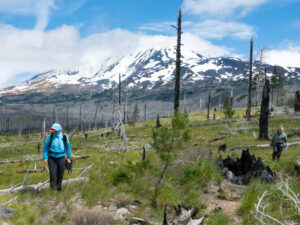
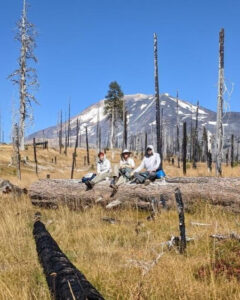
Halfway through a day of collecting seeds from native plant species from forests north of Trout Lake, volunteers and CFC staff enjoyed a break with a unique view. Pahto (Mt. Adams) towered above an expanse of charred snags arranged among a green carpet of wildflowers, shrubs, berries, and new saplings flourishing in the abundant sunlight.


This area burned in 2015’s Cougar Creek Fire. Yet, seven short years later, it is well on its way to recovery and is currently providing valuable early seral habitat (areas characterized by the early stages of forest re-growth which are important to many plant and animal species) to the larger forest ecosystem. In dry mixed-conifer stands, like those found throughout the eastern half of the Gifford Pinchot National Forest, wildfires are a natural and even necessary part of forest ecology. But not every fire-impacted area in this part of the forest is doing as well as this one.


In some instances, climate change has led to more intense wildfires and shorter intervals between burns occurring in the same stands. These high-intensity, low-interval fires can deplete buried seedbanks and the forest’s ability to replenish and rely on the supply, making it difficult for some stands to recover naturally. Not far from where we were enjoying our break another fire-impacted area is fairing much differently. The triple burn area was affected by three fires in a short period of time–2008’s Cold Spring Fire, 2012’s Cascade Creek Fire, and the 2015 Cold Creek Fire. This area is now struggling to recover, so CFC’s staff, the US Forest Service, and volunteers are stepping in to lend a hand through what could be called “assisted migration” of vegetation from healthy stands to areas that have been slow to regrow.


For the past 6 years, we have been working to gather seeds from native plant species like beaked hazelnut, wax currant, snowberry, western columbine, pearly everlasting, ocean spray, lupine, wild roses, Oregon sunshine (aka wooly sunflower), and many others. We collect these materials from forests closely resembling the triple burn area in species composition and elevation. The collected seeds are then being used to revegetate the area where seedbanks have been exhausted.


Guided by Evan Olson, a botanist for the Gifford Pinchot National Forest, volunteers learned how to identify, collect, and label seeds from targeted species, and spent a beautiful sunny Saturday gathering among the understory.


Leading up to the trip, volunteers were given several documents to get a chance to familiarize themselves with the history of the three fires that created the triple burn area and a resource guide of native plant species that we would be encountering in the field. At each site we visited, volunteers and staff split into groups and dispersed throughout the area to find the seeds. Some worked as generalists collecting any species listed in the pre-trip materials they came across. Others specialized in finding one or two species.


At the end of the day, we gathered around Evan’s Forest Service pickup and handed over the last of our haul to be sorted, stored, and then used in upcoming revegetation efforts, including our upcoming and final volunteer trip of the year where many of the same seeds gathered will be spread throughout the triple burn area.


“This is vital work,” Evan explained as he thanked the volunteers for their efforts. Climate change may be altering the ecology of wildfire and the landscape’s ability to regenerate after a burn, but helpful interventions like these can make a long-lasting difference. 

PROJECT UPDATE: INDEPENDENT VOLUNTEERS HAVE SPENT THE SUMMER PEAKING FOR PIKA

At the beginning of June, CFC hosted a virtual training session to teach volunteers how to survey for pika in the talus slope areas of the Gifford Pinchot National Forest. Pika survey efforts have been going on for years in the Columbia Gorge, Mt. Rainier, and other locations within the Cascades, but there’s a gap in pika population data in the Gifford Pinchot. 


Pika near Takh Takh Meadow by Susan Saul


Volunteers could go to sites where pika have previously been observed to conduct sitting surveys, or volunteers could send back reports if they happened to cross paths with a pika when out on a hike. Pika can be hard to spot as they are often well camouflaged by the rocks they inhabit, but wait long enough and they start to scurry around and make calls to the other pika nearby. So far this year, volunteers have conducted 30 sitting surveys and have had 34 opportunistic sightings.


Pika photographed at Goat Ridge Lookout by Jennifer Travers


These new pika sightings will allow us to have more sites to complete the sitting surveys next year. Most of our projects are not possible without the help of volunteers, and that is especially the case for the pika surveys. CFC sends a HUGE thank you to all the volunteers that have participated and are continuing to participate in the first year of these surveys! 


Pika photographed ay McClellan Viewpoint by Steider Studios


There’s still time to get involved! If you want to do a sitting survey, please contact amanda@cascadeforest.org so she can send you all the information you need to get started.


Pika photographed above Miller Creek by Mackenna Milosevich


If you’re ever out on a hike and come across a pika, feel free to share that information with us here.

March 2019 Newsletter

[vc_row row_type=”row” use_row_as_full_screen_section=”no” type=”full_width” angled_section=”no” text_align=”left” background_image_as_pattern=”without_pattern” css_animation=””][vc_column width=”1/12″][/vc_column][vc_column width=”5/6″][vc_column_text]

Protect Clean Water and Fish in Washington
Washington lags behind neighboring states in protecting our waters from the harmful impacts of suction dredge mining. However, the Washington State Legislature is currently considering SB 5322, which would ban suction dredge mining in critical habitat and provide Washington Department of Ecology oversight for Clean Water Act compliance for suction dredge mining.
Your help is needed, please contact your Washington State representatives and urge them to enact common sense protections for native fish populations and clean water by voting YES on SB 5322.
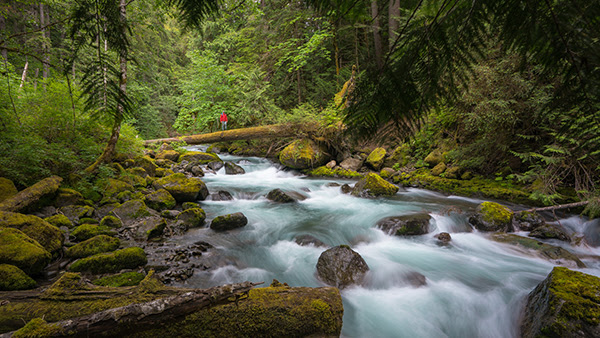
Suction Dredge Plume Upper AmericanThroughout the Gifford Pinchot National Forest there is a network of rivers and streams that provide clean water for communities, fish habitat, and recreation. The Wind, Cispus, Lewis, White Salmon, and the other seemingly endless rivers and tributaries inescapably intertwine clean water with the health of the forest. Clean water is also the foundation of healthy salmon populations. Each year hundreds of millions are spent in an effort to rehabilitate salmonid populations through projects that restore habitat, improve stream shading, and remove barriers to fish passage. Suction dredge mining can undo these efforts in an instant.
Read the full blog here: https://cascadeforest.org/protect-clean-water-and-fish-in-washington/

[/vc_column_text][vc_empty_space][vc_empty_space][vc_separator type=”normal” color=”#444444″ transparency=”3″][vc_empty_space][vc_column_text]

April is Riparian Planting Month!
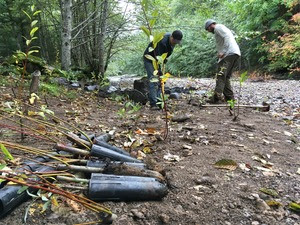
In partnership with the US Forest Service, CFC is continuing to embark on riparian restoration throughout the Gifford Pinchot National Forest. With the help of volunteers, we planted over 2,500 cottonwoods, willows, western redcedars, and Douglas-firs over the past two years. The trees were planted along riparian areas that were lacking trees, lacking tree diversity, and/or had unstable banks. Trees were also planted as forage in areas that could be future habitat to the beavers we release as a part of our Beaver Reineoduction Project. This year, we hope to get our the number of trees planted well in the thousands.
IMG_0781
For this year’s planting efforts, CFC will be leading three trips to the national forest in April. April is an ideal time to plant because the ground is saturated from melting snow and there will be many days of rain. The wet conditions will help the trees settle into the ground after they are planted.Our first trip will be an overnight trip from April 13th-14th where we will plant native trees along Trout Creek, a tributary of Wind River. Trout Creek is home to the threatened salmon species, Lower Columbia River Steelhead. Ten years ago, Hemlock Dam was removed from the creek to improve passage for the threatened steelhead and to enhance aquatic conditions. Now CFC and volunteers are going to help further restore the area by planting hundreds of seedlings. On April 20th, in honor of Earth Day, a one-day planting trip will occur in the Cipsus River Valley to continue our planting work along Yellowjacket Creek and North Fork Cispus. On April 27th, we are partnering with Lower Columbia Fish Enhancement Group to plant along the South Fork Toutle River to help them with their goal of extending the range of usable habitat for Chinook as well as diversify existing steelhead and coho habitat.
Please consider joining us for a planting trip in April! You can head to
https://cascadeforest.org/trip-signup/ to sign up for a trip!

[/vc_column_text][vc_empty_space][vc_separator type=”normal” color=”#444444″ transparency=”3″][vc_empty_space][vc_column_text]

Wild & Scenic Film Festival
Join us for a night of inspiring short films about adventure, nature and conservation! On May 4 we will be screening the “Best of the Fest” – nine of the most impressive short films from the 2019 Wild & Scenic Film Festival. The event will take place at Clark College in Vancouver, WA, on May 4, 2019 from 6 pm to 9 pm. Tickets are just $15 (please purchase in advance at our website) and you can take a look at synopses of the films here: https://cascadeforest.org/get-involved/wild-scenic-film-festival/
RunWildRunFree
Before the screening there will be a short reception with food and drink, and a raffle. See you there!

[/vc_column_text][vc_empty_space][vc_separator type=”normal” color=”#444444″ transparency=”3″][/vc_column][vc_column width=”1/12″][/vc_column][/vc_row]

January 2019 Newsletter

[vc_row row_type=”row” use_row_as_full_screen_section=”no” type=”full_width” angled_section=”no” text_align=”left” background_image_as_pattern=”without_pattern” css_animation=””][vc_column width=”1/12″][/vc_column][vc_column width=”5/6″][vc_empty_space height=”25px”][vc_column_text]

CFC Leadership Transition Announcement

Dear Friends,
MATT_NOHOV 2
After leading more than four years of growth at the Cascade Forest Conservancy (CFC), I will soon take on a new role at Social Venture Partners Portland, a local nonprofit that builds the capacity of other nonprofits by investing human, social, and financial capital. In February, CFC will begin a hiring process to find a new executive director, and I will remain highly involved throughout the transition.
When I joined the Gifford Pinchot Task Force in 2014, I became part of a growing movement to conserve the beautiful and unique resources of the Gifford Pinchot National Forest. We set off to create a new strategic plan based on science and focused on addressing climate change, watershed health, and connecting people to nature. We developed a new name and brand for our group, and people responded. Today we are the Cascade Forest Conservancy, with more than 12,000 members and volunteers. Since 2014, our organization has doubled in size, and we have a solid team of professionals on our staff and board. We have launched bold new conservation programs and established new standards for sustainable timber management, water quality, and wildlife health.
Thank you for your help in making all this possible. It has been an honor to work with you and the CFC team. Please continue to support us as we approach this next stage of growth for Cascade Forest Conservancy!
Matt Little
____________________________________________________________________
A note from CFC’s Board of Directors:
On behalf of the board of the Cascade Forest Conservancy, we want to thank Matt for his great success in taking our organization to new heights and helping us to bring in so many new members, donors, and volunteers like you. We are sad to see Matt go, but know that his talents and heart for service will be used for the greater good in the region. We wish him all the best.
Matt will continue to stay involved with day-to-day operations at CFC as Executive Director while the Board of Directors initiates a nationwide search for his replacement. Matt has graciously agreed to play a dual role for SVP and CFC during this transition period, and will work closely with the new hire to provide training and a smooth handoff of responsibilities.
Be assured that all CFC programs will continue to operate and grow as planned in our strategic plan (available online at https://cascadeforest.org/about-us/strategy/). CFC will continue offering amazing events and opportunities for you to engage with us during this upcoming field season.
We appreciate your continued support of CFC as we implement our mission to “protect and sustain forests, streams, wildlife, and communities in the heart of the Cascades through conservation, education, and advocacy.”
Thank you!
John Miller, Board Chair[/vc_column_text][vc_empty_space][vc_separator type=”normal” color=”#444444″ thickness=”3″][vc_empty_space][vc_column_text]

Protecting Mount St Helens

Mount St. Helens and the surrounding areas impacted by the 1980 eruption are a Pacific Northwest icon. The impact of the eruption, and the recolonization of plants and animals in the decades since, has created a unique environment that is treasured throughout the world. Since our founding in 1985, Cascade Forest Conservancy has worked to protect the Mount St. Helens region from activities that would harm this irreplaceable landscape. Currently, our work near Mount St. Helens involves continuing to fight a hardrock mining proposal on the Mount St. Helens National Volcanic Monument Border, and opposing an administrative road across the heart of the Pumice Plain.
IMG_5176
2018 ended with some disappointing decisions from the Forest Service and Bureau of Land Management on these projects. In November the Forest Service released a draft decision notice authorizing an administrative access route across the Pumice Plain. This route would drastically impact the ecology and scientific research on the Pumice Plain. Cascade Forest Conservancy, researchers, and concerned citizens submitted objection letters to the Forest Service during the objection period, which ended on December 21. We are now waiting for the Forest Service to respond to our objections, which may be delayed due to the federal government shutdown.
IMG_5183
In December the Bureau of Land Management granted Ascot Resources permits to conduct exploratory drilling in the Green River valley, at the edge of the Mount St. Helens blast zone. These permits are the final action by the Forest Service and Bureau of Land Management to allow exploratory drilling by Ascot to search for copper, gold, and molybdenum. CFC is concerned with exploratory drilling in the Green River valley because the 24/7 drilling and associated road closures would negatively impact recreation in this backcountry area. Exploratory drilling is also the first step toward developing a hard rock mine, which would be catastrophic for the water quality of the Green River and surrounding valley. We will continue to oppose the exploratory drilling permits and urge our representatives in Congress to take action to protect the Green River valley from mining.Mount St. Helens: No Place for a Mine: https://cascadeforest.org/stop-the-mine/
To learn more about our work to protect the Pumice Plain, read this blog: https://cascadeforest.org/protecting-the-unique-environment-of-mount-st-helens/

[/vc_column_text][vc_empty_space][vc_separator type=”normal” color=”#444444″ thickness=”3″][vc_empty_space][vc_column_text]

2019 Trip Update!

Stay tuned for our 2019 volunteer trip list, coming out in February!
Learn more about our citizen science program here: https://cascadeforest.org/our-work/citizen-science/
 
trips

[/vc_column_text][vc_empty_space][vc_separator type=”normal” color=”#444444″ thickness=”3″][vc_empty_space][/vc_column][vc_column width=”1/12″][/vc_column][/vc_row][vc_row row_type=”row” use_row_as_full_screen_section=”no” type=”full_width” angled_section=”no” text_align=”left” background_image_as_pattern=”without_pattern” css_animation=””][vc_column width=”1/12″][/vc_column][vc_column width=”5/6″][vc_column_text]

Join the CFC Canvass!

CFC is still looking for dedicated, outgoing canvassers to join their Portland-based team!  If you love CFC, and making a difference, why not join us?  Evening shifts available.  To learn more, read the full job description here: https://cascadeforest.org/get-involved/employment/[/vc_column_text][vc_empty_space][/vc_column][vc_column width=”1/12″][/vc_column][/vc_row]

October 2018 Newsletter

[vc_row row_type=”row” use_row_as_full_screen_section=”no” type=”full_width” angled_section=”no” text_align=”left” background_image_as_pattern=”without_pattern” css_animation=””][vc_column width=”1/12″][/vc_column][vc_column width=”5/6″][vc_column_text]

Thank You to Our Volunteers!

Thanks to our awesome volunteers, we had a great year of conservation trips in the Gifford Pinchot National Forest! We led a number of beaver habitat surveys, collected seeds for post-fire restoration projects, did some riparian planting, measured huckleberry regrowth in treatment areas, and explored areas slated for timber harvest. We wouldn’t have accomplished half as much without the dedicated volunteers who help make it happen. We’d like to thank everyone who joined for trips this year. Your involvement makes a huge difference for our organization.
So far we’ve had 120 adult volunteers and 215 students join for trips in 2018, and we still have a few more trips planned for the year—a riparian planting trip and three Young Friends of the Forest trips. As we wrap up a great field season and gear up for planning another, we are feeling extremely grateful for everyone who has made it their mission to actively participate in the stewardship of this wonderful landscape of the southern Washington Cascades.

Volunteers show off their seed collection bounty

[/vc_column_text][vc_empty_space][vc_separator type=”normal” color=”#444444″ thickness=”3″][vc_empty_space][vc_column_text]

CFC‘s Banquet and Auction Recap

CFC‘s annual Banquet and Auction on October 4 was a rousing success! We had a great night celebrating with our friends and supporters, and raised more money than ever before for our conservation programs. You can take a look at some photos here: https://photos.app.goo.gl/ji7MXbbRjyG9WkVs8
A special thanks goes out to our sponsors below, and especially to the Cowlitz Indian Tribe for being our premier sponsor. At our event, we highlighted CFC‘s Young Friends of the Forest Program, which brings over 200 middle and high school students each year on science and restoration trips to the Gifford Pinchot National Forest. We’re grateful to everyone who attended for supporting this and many other projects in Washington’s South Cascades.
2018 Auction and Banquet Sponsors:
Cowlitz Indian Tribe, Mountain Rose Herbs, Friends of Mount Adams, Columbia Sportswear, Oregon RFID, Oregon Data, Hammer & Hand Construction, Home Advisor, Gordon King[/vc_column_text][vc_empty_space][vc_separator type=”normal” color=”#444444″ thickness=”3″][vc_empty_space][vc_column_text]

Volunteer of the Year – Bob Robison!

Bob Robison was recognized as our Volunteer of the Year for 2018! Bob has been volunteering with CFC for over 3 years. This year he went on over half our trips and went out on his own multiple times to work on our beaver habitat surveys. Needless to say, Bob has worked on almost all of our projects. He’s able to help teach new volunteers the tricks of the trade, easily making him an invaluable person to have in the field with us. Thanks for all you do for CFC Bob!

  Fieldwork Coordinator Amanda Keasberry and VOTY Bob Robison

[/vc_column_text][vc_empty_space][vc_separator type=”normal” color=”#444444″ thickness=”3″][vc_empty_space][vc_column_text]

Comments on Marbled Murrelet Long-Term Conservation Strategy due November 6

Marbled murrelets are seabirds about the size of a robin, related to puffins, and some might say they are similar in shape to a potato. A majority of their lives are spent out at sea, where they feed on small fish and crustaceans. The nesting behavior of marbled murrelets was a mystery until 1974 when the first nest was discovered. These birds do not build a nest, but instead lay one egg on a mossy limb of an old growth conifer.

Marbled_murrelet_USFS_460 USFS Martin Raphael
To provide suitable nesting habitat for marbled murrelets, trees need to have old growth characteristics such as large, mossy branches and other deformities that can be used as nesting platforms. Generally it takes forests at least 100 years to develop these characteristics. While raising chicks, murrelets must return to the sea nightly to forage for food, therefore mature forests must also be located within 55 miles of marine waters to be suitable as nesting habitat. This unique nesting behavior inescapably binds the fate of marbled murrelets with the fate of mature and old growth forests.What is the Long Term Conservation Strategy and why is it important for marbled murrelets?
Read more in our blog, here: https://cascadeforest.org/comments-on-marbled-murrelet-long-term-conservation-strategy-due-november-6/

[/vc_column_text][vc_empty_space][vc_separator type=”normal” color=”#444444″ thickness=”3″][vc_empty_space][vc_column_text]

Join the CFC Canvass!

CFC is still looking for dedicated, outgoing canvassers to join their Portland-based team!  If you love CFC, and making a difference, why not join us?  Evening shifts available.  To learn more, read the full job description here: https://cascadeforest.org/get-involved/employment/

[/vc_column_text][vc_empty_space][vc_separator type=”normal” color=”#444444″ thickness=”3″][vc_empty_space][vc_column_text]

Happy Halloween from CFC!

In the spirit of the season, we want to remind you of what you can do to help our furry flying friend, the bat!  White-Nose Syndrome is a serious and deadly disease killing millions of bats across the country.  Bats get a bad wrap for being nocturnal creatures that creep around in dark caves, and are largely associated with vampires in popular culture and mythical lore.  However, bats are actually extremely useful to humans!  They are master pollinators of some of our favorite foods, eat many of the bugs that ‘bug’ us outdoors, and can even benefit our health!  According to the National Wildlife Federation, bat saliva has been used to develop drugs that help stroke victims.
Photo by Julia Boland, USFWS
We can help protect our bat friends by building bat houses to give them a safe place to live, but also by learning about deadly White-Nose Syndrome and what we can do to stop it’s spread.  The Forest Service has a great guide where you can learn more: https://www.fs.usda.gov/detail/r6/home/?cid=FSEPRD501165

[/vc_column_text][vc_empty_space][vc_separator type=”normal” color=”#444444″ thickness=”3″][vc_empty_space][/vc_column][vc_column width=”1/12″][/vc_column][/vc_row]