August 2018 Newsletter

[vc_row row_type=”row” use_row_as_full_screen_section=”no” type=”full_width” angled_section=”no” text_align=”left” background_image_as_pattern=”without_pattern” css_animation=””][vc_column width=”1/12″][/vc_column][vc_column width=”5/6″][vc_empty_space][vc_column_text]

Join us at our biggest event of the year! All proceeds from our auction and banquet go to CFC’s conservation, education and advocacy programs. Get your tickets here: https://cascadeforest.org/get-involved/2018-banquet

gala_banner[/vc_column_text][vc_empty_space][vc_separator type=”normal” color=”#444444″ thickness=”3″][vc_empty_space][vc_column_text]

CFC’s Partnership with the Cowlitz Indian Tribe
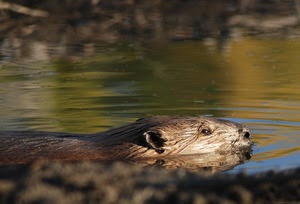
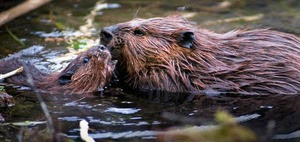
The Cascade Forest Conservancy (CFC) has grown a special partnership with the Cowlitz Indian Tribe (CIT) on a number of important projects. The Tribe has been a partner of ours for many years, collaborating in the field as well as on natural resources policy issues, but now we are rolling up our sleeves for several on-the-ground restoration projects. Most recently, the Cowlitz Tribe has been a key partner on our beaver reintroduction efforts, and a sub-grantee of a CFC Wildlife Conservation Society grant. This exciting collaboration is a major, landscape-scale restoration project in the Gifford Pinchot National Forest that grew out of our 2016 Wildlife and Climate Resilience Guidebook. To date, CIT has collaborated with us on many pivotal aspects of the project – joining us on beaver habitat surveys, forming agreements with wildlife trapping companies to gather the beaver, and creating holding facilities to keep the beaver comfortable until they can be relocated.

Read the full blog post here: https://cascadeforest.org/cfcs-partnership-with-the-cowlitz-indian-tribe/

beaver-1343797_960_720

[/vc_column_text][vc_empty_space][vc_separator type=”normal” color=”#444444″ thickness=”3″][vc_empty_space][vc_column_text]

Green River Valley Trip Report


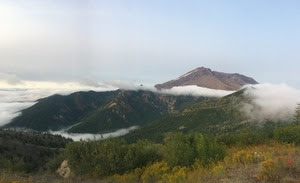
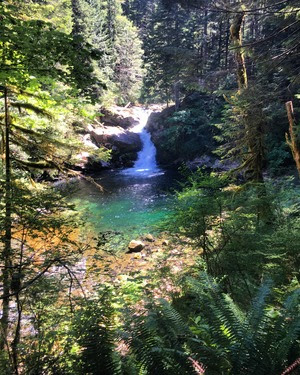
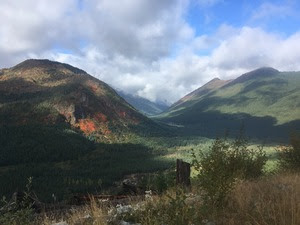
It takes roughly three hours to drive to the Green River valley near Mount St. Helens from Portland, and the road is only accessible from late summer through early fall each year. The remote nature of this landscape is part of what makes it such an incredible place for recreation. Visitors to this area can hike, camp, bike, ride horses, and hunt, and rarely come into contact with more than a few people. Listening to this landscape reveals water bubbling down the Green River, rustling trees, birds, and other natural sounds. Potentially more notable, is what is often not heard in this valley surrounded by large roadless areas – cars and other human-caused noises. As population throughout the region continues to grow, and more people learn the joy of experiencing public lands, it becomes increasingly important to protect areas that provide a remote recreation experience. Allowing exploratory drilling in the Green River valley would mean one less place for people to enjoy solitude and the sounds of nature.

IMG_5178
In July and August we visited the valley with our partners at Earthrise Law Center and concerned citizens. During these trips we visited the sites that would be most impacted by the mining proposal such as the Green River Horse Camp, the Green River trail, and Goat Mountain trail. Summer is a fantastic time to wade in the cool, clean waters of the Green River and acknowledge the essential habitat it provides for wild steelhead further downstream. We were not alone in enjoying the Green River valley, as the trails are becoming increasingly popular with hikers and mountain bikers experiencing the mosaic landscape at the edge of Mount St. Helens blast-zone. We came across evidence of bears, elk, woodpeckers, and other wildlife as we hiked the Green River trail through dense forest to blast-zone meadows with standing dead trees. Each trip to the Green River valley creates unique memories in a landscape that drastically changes throughout the seasons and years, and further underscores that this place should be protected from mining exploration and development.

[/vc_column_text][vc_empty_space][vc_separator type=”normal” color=”#444444″ thickness=”3″][vc_empty_space][vc_column_text]Seed Collection for Post-Fire Restoration
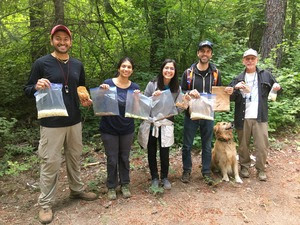
This weekend we will be out in the forests near Mount Adams collecting native seeds with volunteers as part of the multi-year effort to restore post-fire areas that were severely impacted by successive, high-intensity fires between 2008 and 2015. These seeds collected this weekend will be used for future seeding trips. Our trip will start with a training at the Mount Adams Ranger District office where the local Forest Service botanist will train volunteers on plant identification for target species and seed collection techniques.
Without active restoration, many native species are unlikely to re-colonize the area in the near future (or perhaps for decades), which will negatively impact local wildlife, decrease overall ecosystem resilience. This can also increase the establishment and spread of non-native invasive species. Reintroducing a diverse set of native plant species will improve the resilience of local wildlife and ecosystems and will create habitat for pollinators, birds, mammals, and other vegetation.[/vc_column_text][vc_empty_space][vc_separator type=”normal” color=”#444444″ thickness=”3″][vc_empty_space][vc_column_text]

Year 2 of Huckleberry Monitoring Project


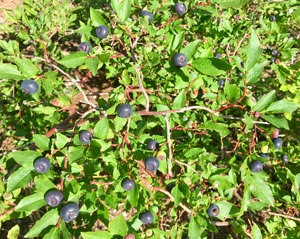
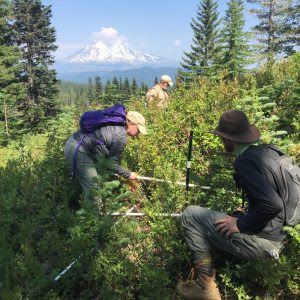
BerryPic 2It is currently peak huckleberry season, and pickers are out gathering berries all through the Gifford Pinchot National Forest. CFC has been out in the GPNF since late July working with volunteers, staff, and other organizations to collect data for our huckleberry monitoring project. This year and last, we have visited forest stand units that have been treated (thinned) using different techniques in hopes of optimizing huckleberry plant growth and fruit production. We have units that we are monitoring near Pinto Rock and the Sawtooth Berry Fields. These are both areas where huckleberry has been known to flourish but could use more sunlight to enhance productivity.Once we know which treatment types are most suitable for huckleberry, the results of the research will be written into the Gifford Pinchot National Forest Huckleberry Management Strategy. There is currently a draft of this document with our preliminary data, which can be found here https://pinchotpartners.org/wp-content/uploads/2017/12/Huckleberry-Strategy-04.10.17.pdf.
If you’d like to head out to the GP and gather huckleberries, make sure to download a free permit online, visit this website for more details https://apps.fs.usda.gov/gp/

[/vc_column_text][vc_empty_space][vc_separator type=”normal” color=”#444444″ thickness=”3″][vc_empty_space][vc_column_text]

New 2018-2020 Strategic Plan


CFC has put together an ambitious three-year plan to combat climate change, protect wildlands, and conserve our streams, fish, and wildlife for future generations. Please check it out, along with our 2017 Annual Report, here: https://cascadeforest.org/about-us/strategic-plan-annual-report/

[/vc_column_text][vc_empty_space][vc_separator type=”normal” color=”#444444″ thickness=”3″][vc_empty_space][vc_column_text]

Thank You, Nike!


The CFC offices recently recieved a makeover, thanks to the generous folks over at Nike!  They donated us desks, lamps, storage units, chairs, and a new boardroom table and rug.  We are grateful for their donation and support!

[/vc_column_text][vc_empty_space][vc_separator type=”normal” color=”#444444″ thickness=”3″][/vc_column][vc_column width=”1/12″][/vc_column][/vc_row]

June 2018 Newsletter

[vc_row row_type=”row” use_row_as_full_screen_section=”no” type=”full_width” angled_section=”no” text_align=”left” background_image_as_pattern=”without_pattern” css_animation=””][vc_column width=”1/12″][/vc_column][vc_column width=”5/6″][vc_separator type=”normal” color=”#444444″ thickness=”3″][vc_column_text]

Protecting the Unique Environment of Mount St. Helens

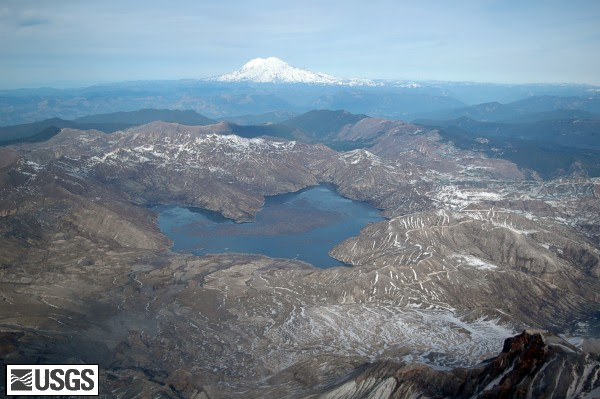
[/vc_column_text][vc_separator type=”normal” color=”#444444″ thickness=”3″][vc_column_text]The 1980 eruption of Mount St. Helens drastically altered the landscape of Southwest Washington in a matter of moments. A massive debris avalanche, formerly the north side of the mountain, crashed into Spirit Lake and careened down the Toutle River. The blast from the eruption destroyed ancient forests and covered the lands near the volcano in a layer of ash and pumice.
In 1982, Congress created the 110,000 acre Mount St. Helens National Volcanic Monument to protect the unique research and recreation opportunities of this landscape. The heart of the Monument, and the research conducted there, is the Pumice Plain – where nothing survived the eruption.
Read the full blog here: https://cascadeforest.org/protecting-the-unique-environment-of-mount-st-helens/

Spirit Lake

[/vc_column_text][vc_empty_space][vc_separator type=”normal” color=”#444444″ thickness=”3″][vc_column_text]

CFC and Local Schools!

[/vc_column_text][vc_separator type=”normal” color=”#444444″ thickness=”3″][vc_column_text]

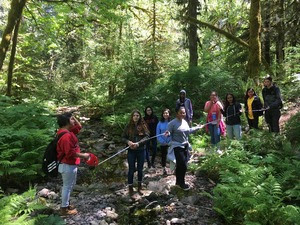
During April and May, we had 151 students participate in our Young Friends of the Forest program. This accounted for 862 hours contributed to two of CFC’s ongoing projects! We worked with six schools total, two of which were schools we had not previously worked with – Oliver P. Lent K-8 School (OR) and Centennial High School (OR). The other four schools – West Linn High School (OR), Stevenson High School (WA), Heritage High School (WA) and Sunnyside K-8 School (OR) – were those that we have partnered with in previous years.
On all six trips, the students collected data for the second phase of our Beaver Reintroduction Project. This phase involves investigating potential release sites that were previously identified by a spatial model created by CFC. Using a site scorecard, students made observations and ranked different environmental features along the stream of interest and the surrounding forested area. Each area was given a final score and, ultimately, those scores will be used to decide which sites are the most optimal for beaver to inhabit. The data collected by the students is integral the overall project so we cannot thank them enough for their involvement.
unnamed
Centennial High School also participated in riparian planting near the confluence of Trapper Creek and Wind River. The area lacked many hardwood species that are preferred by beaver, so the 255 trees planted by the students will have a positive impact on the area and increase the possibility of beaver being released there. Stevenson High School also conducted forest health surveys where they learned about signs of tree disease, forest structure, and measuring tree diameter. The spring trips went by in a flash, but we can’t wait to bring out more students in the fall!

[/vc_column_text][vc_empty_space][vc_separator type=”normal” color=”#444444″ thickness=”3″][vc_column_text]

Our Biggest Event of the Year!

[/vc_column_text][vc_separator type=”normal” color=”#444444″ thickness=”3″][vc_column_text]

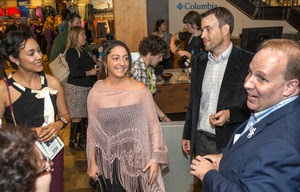
CFC-6653Did you know that CFC’s fall banquet on October 4th is our biggest event of the year? It’s one of the best – and certainly most fun – ways to support our work. All proceeds go to our programs that serve the forests, streams, wildlife and communities in the heart of the Cascades. This year we are fortunate to have the beautiful Miller Hall at the World Forestry Center as our venue, and tons of great deals in our auction. Elephant’s Delicatessen will be catering for us and the open bar will feature drinks from several local breweries and vineyards. Get your tickets today!
Individual tickets are $75 and a Patron level sponsorship (which includes 2 tickets) is $250. Click on the link below to RSVP.
Thursday, October 4, at 6:00 pm
World Forestry Center, Miller Hall
4033 SW Canyon Road, Portland, OR 97221
Business Casual attire
Click here to RSVP (https://cascadeforest.org/get-involved/2018-banquet-auction/)

[/vc_column_text][vc_empty_space][vc_separator type=”normal” color=”#444444″ thickness=”3″][vc_column_text]

Join CFC in the Field!

[/vc_column_text][vc_separator type=”normal” color=”#444444″ thickness=”3″][vc_column_text]TripSignUp-3-300x300
Have you ever wondered what it’s like to do field work in the heart of the Gifford Pinchot?  You’re in luck!
CFC runs a series of restoration trips each summer, where members and friends like you can get hands-on in the forest!
There is still room on several of our trips.  Visit our website to sign up today!

[/vc_column_text][vc_empty_space][vc_empty_space][vc_empty_space][vc_separator type=”normal” color=”#444444″ thickness=”3″][vc_column_text]

A New Way to Support CFC: Buy or Sell a House!

[/vc_column_text][vc_separator type=”normal” color=”#444444″ thickness=”3″][vc_column_text]We have two exciting new partnerships with local realtors, who are CFC members and will make a contribution to us if you buy or sell a home with them. Kellia and Tim are passionate about the outdoors and recreation — and they’re wonderful real estate agents! If you or anyone you know is looking to buy or sell a home, remember that a referral from CFC will bring funding to our programs in conservation, education and advocacy.
VANCOUVER AREA- Kellia Nichols (kellia@rosere.net) NW Rose Real Estate
(http://www.roserealestategroup.com). You can work with any realtor at NW Rose Real Estate, and they will donate a portion of their commission to CFC if you buy or sell a home with them.
PORTLAND AREA – Tim Wilson (timwilson@kniperealty.com), Knipe Realty NW
Tim will make a $1,000 donation on behalf of customers referred through CFC, for each transaction that he closes.
Thank you, Tim and Kellia, for supporting our work![/vc_column_text][vc_empty_space][vc_separator type=”normal” color=”#444444″ thickness=”3″][vc_column_text]

Staff Comings and Goings

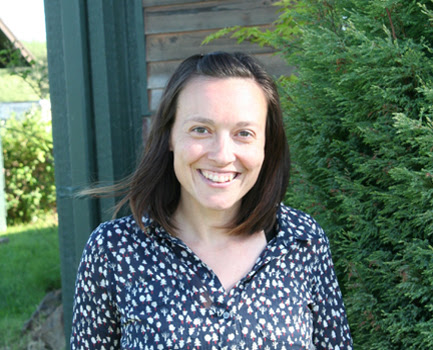
[/vc_column_text][vc_separator type=”normal” color=”#444444″ thickness=”3″][vc_column_text]Welcome to Suzanne Whitney, who joins CFC as our Science and Fieldwork Coordinator, and Katie Spahn, who joins our awesome canvass team of Outreach Advocates. Both have advanced degrees in their field and look forward to promoting conservation in the Pacific Northwest. Also, good luck to Xavier Reed, who is moving on but has worked hard to bring a high level of professionalism to CFC’s canvass outreach team. Thank you Xavier!
suzanne-1
Hello – Suzanne Whitney
Katie1
Hello – Katie Spahn
xavier1
Goodbye – Xavier Reed[/vc_column_text][vc_separator type=”normal” color=”#444444″ thickness=”3″][/vc_column][vc_column width=”1/12″][/vc_column][/vc_row]

March 2018 Newsletter

[vc_row row_type=”row” use_row_as_full_screen_section=”no” type=”full_width” angled_section=”no” text_align=”left” background_image_as_pattern=”without_pattern” css_animation=””][vc_column width=”1/12″][/vc_column][vc_column width=”5/6″][vc_separator type=”normal” color=”#444444″ thickness=”3″][vc_column_text]

Make Your Voice Heard!

[/vc_column_text][vc_separator type=”normal” color=”#444444″ thickness=”3″][vc_column_text]

If you haven’t taken our 2018 Member and Friend survey, please take 3-5 minutes to give us your opinions!  Responses close on Friday, March 16th!
Here’s the link again: https://www.surveymonkey.com/r/CFC2018_MemberAndFriendSurvey


2018surveyslider

[/vc_column_text][vc_empty_space][vc_separator type=”normal” color=”#444444″ thickness=”3″][vc_column_text]

Mount St Helen’s Mine Update

[/vc_column_text][vc_separator type=”normal” color=”#444444″ thickness=”3″][vc_column_text]

The Forest Service has finalized their decision to consent to exploratory drilling in the Green River valley. Currently, the Bureau of Land Management is deciding whether to issue exploratory drilling permits to Ascot Resources. We will continue to challenge these permits through administrative processes and the courts.
20180307_190353 2
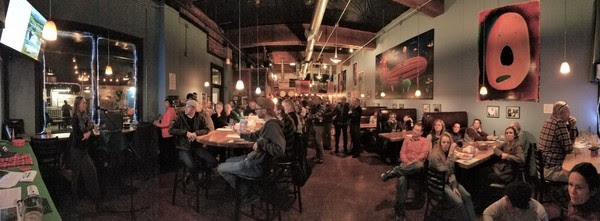
Thank you to everyone who attended our outreach event at Trap Door Brewing in Vancouver, WA on March 7th! We had a wonderful evening celebrating our successful opposition to this mine for over a decade and discussing what 2018 will bring for this campaign.To learn more about how to stop mining near Mount St. Helens and take action, visit: https://cascadeforest.org/stop-the-mine/

[/vc_column_text][vc_empty_space][vc_separator type=”normal” color=”#444444″ thickness=”3″][vc_column_text]

New Blog! : Forest Collaborative Groups

[/vc_column_text][vc_separator type=”normal” color=”#444444″ thickness=”3″][vc_column_text]P1000408In forest collaborative groups, diverse stakeholders including environmental organizations, timber companies, recreational organizations, and other interested members of the community come together to discuss timber sales and other proposed projects with Forest Service staff. Cascade Forest Conservancy is a founding member of, and active participant in, both forest collaboratives in the Gifford Pinchot National Forest. The Pinchot Partners, formed in 2003, focuses on projects in the Cowlitz Valley Ranger District, and the South Gifford Pinchot Collaborative, formed in 2011, focuses on projects in the Mt. Adams Ranger District. Through collaborative participation, our goal is to influence GPNF projects to be sustainable for wildlife, fish, water quality, and local communities.
Read the full blog here: https://cascadeforest.org/forest-collaborative-groups/[/vc_column_text][vc_empty_space][vc_separator type=”normal” color=”#444444″ thickness=”3″][vc_column_text]

CFC Friends Featured on OPB!

[/vc_column_text][vc_separator type=”normal” color=”#444444″ thickness=”3″][vc_column_text]finding big trees 800wDarryl and Darvel Lloyd were recently featured in an OPB special about their long history of conservation work on Mount Adams. The Lloyd brothers have been great partners of CFC for many years. We are lucky to get to work beside them in studying and helping to protect the unique landscapes of Mount Adams.

[/vc_column_text][vc_empty_space][vc_empty_space][vc_empty_space][vc_empty_space][vc_separator type=”normal” color=”#444444″ thickness=”3″][vc_column_text]

CFC Annual Report Now Online

[/vc_column_text][vc_separator type=”normal” color=”#444444″ thickness=”3″][vc_column_text]Click here (https://cascadeforest.org/wp-content/uploads/AnnualReport2017.pdf) to take a look at our 2017 Annual Report, where we describe some of our major accomplishments over the past year. Thank you to all our members and supporters for making our work possible![/vc_column_text][vc_empty_space][vc_separator type=”normal” color=”#444444″ thickness=”3″][vc_column_text]

CFC is hiring!

[/vc_column_text][vc_separator type=”normal” color=”#444444″ thickness=”3″][vc_column_text]If you’re an energetic individual who is passionate about the environment, enjoys working outside and meeting new people, we’d like to meet you. The Cascade Forest Conservancy is looking for someone like you to join us as a Membership Outreach Advocate!  Channel your passion for the outdoors into action and make a difference with this exciting opportunity!
Find out more here: https://cascadeforest.org/get-involved/employment/[/vc_column_text][vc_empty_space][vc_separator type=”normal” color=”#444444″ thickness=”3″][/vc_column][vc_column width=”1/12″][/vc_column][/vc_row]

January 2018 Newsletter

[vc_row row_type=”row” use_row_as_full_screen_section=”no” type=”full_width” angled_section=”no” text_align=”left” background_image_as_pattern=”without_pattern” css_animation=””][vc_column width=”1/12″][/vc_column][vc_column width=”5/6″][vc_separator type=”normal” color=”#444444″ thickness=”3″][vc_column_text]

Call to Action!

[/vc_column_text][vc_separator type=”normal” color=”#444444″ thickness=”3″][vc_column_text]

IMG_0071We are continuing to oppose threats to bedrock federal environmental protections including bills, riders, and administrative rule changes. Riders on bills could weaken protections for endangered species and roadless areas, and allow harmful logging with little environmental review. One rider on the Senate Interior Appropriations bill threatens nearly one-quarter of all roadless areas in the United States by exempting Alaska from the 2001 Roadless Rule, which protects roadless national forests from logging and road-building. This rider on the appropriations bill is an attack on all national forest roadless areas because state-by-state exemptions would erode the Roadless Rule. Call your senators and urge them to oppose any attacks on the Roadless Rule and other important environmental protections.
Who to contact
Oregon Residents:
Senator Jeff Merkley: (202)-224-3753  (website)
Senator Ron Wyden: (202)-224-5244  (website)
Washington Residents:
Senator Maria Cantwell: (202) 224-3441 (website)
Senator Patty Murray: (202) 224-2621 (website)

[/vc_column_text][vc_empty_space][vc_separator type=”normal” color=”#444444″ thickness=”3″][vc_column_text]

With the New Year, Comes a New Project for CFC! 

[/vc_column_text][vc_separator type=”normal” color=”#444444″ thickness=”3″][vc_column_text]

Beaver_Newsletter_PicBeavers have a bit of a reputation as being nuisances for landowners. But to us, they are self-adapting ecosystem engineers! For that reason, we are beginning a project with Cowlitz Indian Tribe to reintroduce more beavers into the aquatic ecosystems of Gifford Pinchot National Forest.

[/vc_column_text][vc_empty_space][vc_empty_space][vc_separator type=”normal” color=”#444444″ thickness=”3″][vc_column_text]

Planned Giving: Leaving a Legacy for our Forests

[/vc_column_text][vc_separator type=”normal” color=”#444444″ thickness=”3″][vc_column_text]At Cascade Forest Conservancy we rely on our members and friends to support our work.  Your support helps us bring youth and adult volunteers on stewardship trips, prepare our lands for the impacts of climate change, and conserve important natural resources and wildlife.
For those who want to leave a real legacy on our organization for years to come, making a bequest or other planned gift is a great idea.  CFC can accept most kinds of planned gifts, and the best thing to do is to talk to a member of our staff, like Development Manager Michal Orczyk (michal@cascadeforest.org). By writing our organization into your will or making a bequest, you will be remembered as a champion of public lands in the Pacific Northwest. If you have any questions, reach out to us, or take a look at this online guide: https://www.donorsearch.net/planned-gifts-complete-guide/. CFC is developing a program to acknowledge and recognize planned gifts, which we plan to launch in 2018.[/vc_column_text][vc_empty_space][vc_empty_space][vc_separator type=”normal” color=”#444444″ thickness=”3″][vc_column_text]

Join us for our Mount St Helens Mine Event on February 21st!

[/vc_column_text][vc_separator type=”normal” color=”#444444″ thickness=”3″][vc_column_text]

26 Overlook
Please join us on February 21 from 6:30to 8:30 p.m. at Trap Door Brewing in Vancouver for a presentation about our efforts to stop mining in the Green River valley. Now is the time to take action to stop mining near Mount St. Helens, and we need your help! We will present updates, upcoming actions in 2018, and do a raffle for prizes.

[/vc_column_text][vc_empty_space][vc_empty_space][vc_empty_space][vc_empty_space][vc_separator type=”normal” color=”#444444″ thickness=”3″][vc_column_text]

CFC is hiring!

[/vc_column_text][vc_separator type=”normal” color=”#444444″ thickness=”3″][vc_column_text]Do you love the work CFC does protecting and conserving forests, streams, wildlife and communities in the Gifford Pinchot?  Why not join our team!  We are seeking a Membership Outreach Advocate to work in out Portland office.
To learn more about the role, and how to apply, visit our website:
https://cascadeforest.org/get-involved/employment/[/vc_column_text][vc_empty_space][vc_empty_space][vc_separator type=”normal” color=”#444444″ thickness=”3″][/vc_column][vc_column width=”1/12″][/vc_column][/vc_row]

November 2017 Newsletter

[vc_row row_type=”row” use_row_as_full_screen_section=”no” type=”full_width” angled_section=”no” text_align=”left” background_image_as_pattern=”without_pattern” css_animation=””][vc_column width=”1/12″][/vc_column][vc_column width=”5/6″][vc_separator type=”normal” color=”#444444″ thickness=”3″][vc_column_text]

Protecting Key Habitat Areas of the Gifford Pinchot National Forest

[/vc_column_text][vc_separator type=”normal” color=”#444444″ thickness=”3″][vc_column_text]From old-growth forests to snow-covered alpine areas, Washington’s South Cascades are home to a variety of habitat types that support unique plant and animal populations. Connectivity throughout the landscape allows wildlife to move between habitat areas, enabling populations to be more resilient to a changing climate. Cascade Forest Conservancy has identified some of the key areas in the Gifford Pinchot National Forest that, with increased protections, would improve the ability of wildlife populations to move between patches of habitat and be more resilient to climate change impacts.
Read more in our blog https://cascadeforest.org/protecting-key-habitat-areas-of-the-gifford-pinchot-national-forest/[/vc_column_text][vc_empty_space][vc_empty_space][vc_separator type=”normal” color=”#444444″ thickness=”3″][vc_column_text]

Mount St. Helens Mine Update 

[/vc_column_text][vc_separator type=”normal” color=”#444444″ thickness=”3″][vc_column_text]

October was a busy month for the campaign to stop mining near Mount St. Helens! At the beginning of the month, with the help of our attorneys, Tom Buchele at Earthrise Law Center and Roger Flynn at Western Mining Action Project, we submitted our objection letter to the Forest Service Draft Decision Notice to allow exploratory drilling in the Green River valley. Read our objection letter here. During the objection period, CFC and our coalition partners also generated thousands of petition signatures opposing the permit decision from concerned citizens. CFC also led a hike along the Green River trail, where we experienced first-hand the unique beauty of the Green River valley. We are committed to protecting the Green River valley from mining by challenging the permit decision in court and advocating for long-term protection of this area. Please consider supporting our fight by donating to CFC.
Visit our page on the mine by clicking here: https://cascadeforest.org/our-work/mining/

[/vc_column_text][vc_empty_space][vc_separator type=”normal” color=”#444444″ thickness=”3″][vc_column_text]

CFC’s Annual Auction and Banquet a Success!

[/vc_column_text][vc_separator type=”normal” color=”#444444″ thickness=”3″][vc_column_text]The board, staff, and volunteers of CFC wish to thank everyone who attended the 2017 Annual Auction and Banquet.  This year’s event was held at the Melody Ballroom, and was a lovely evening.  An array of silent auction items, the Wall of Beverages, the popular Heads & Tails bead game, the live auction, and the Dessert Dash were all a big hit with the crowd!  This year’s Special Appeal, focusing on the Mt. St Helen’s mine campaign, was a great chance to support the important work that CFC does to protect the Gifford Pinchot National Forest from environmental degradation.
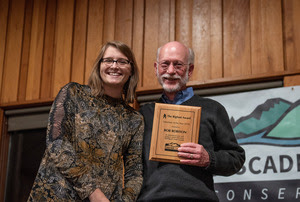
Matt Little’s presentation and video on CFC’s successes and upcoming challenges was very inspiring. Matt also presented this year’s Big Foot Volunteer of the Year Award to Steve Jones for his ongoing work in conservation. It was accepted in his absence by John Bohrnsen, President of the Clark-Skamania Fly fishers.
The strong show of support from members and guests in attendance raised over $40,000 for conservation. Thank you![/vc_column_text][vc_empty_space][vc_separator type=”normal” color=”#444444″ thickness=”3″][vc_column_text]

Young Friends of the Forest!

[/vc_column_text][vc_separator type=”normal” color=”#444444″ thickness=”3″][vc_column_text]Evergreen High School and Heritage High School in Vancouver, WA and Robert Gray Middle School in Portland, OR participated in our Young Friends of the Forest program this October. Evergreen’s Environmental Science Class embarked on a wildlife camera survey where they helped set up the cameras and learned about animal track and scat identification. Classes from Robert Gray Middle School and Heritage High School assisted with the first stages of our beaver reintroduction project by assessing habitat suitability in wetlands and riparian areas. Each class also planted around 80 trees to improve aquatic habitat, increase bank stability and biodiversity, and create future forage for newly reintroduced beavers. A huge thank you to all the teachers and students involved with the projects this semester![/vc_column_text][vc_empty_space][vc_empty_space][vc_empty_space][vc_separator type=”normal” color=”#444444″ thickness=”3″][vc_column_text]

Comings and Goings

[/vc_column_text][vc_separator type=”normal” color=”#444444″ thickness=”3″][vc_column_text]A big thank you goes out to our accountant, Mona Lindsey, who recently moved to California. In her absence, Amy Wheeler has joined our team, coming to us with extensive experience in financial management for nonprofits. We also wished bon voyage to Michal Orczyk, who recently traveled to Europe to climb and explore. A warm welcome goes out to Carolyn Candela and Lauren Jarrett, who are serving important roles for CFC in development, membership, and marketing.[/vc_column_text][vc_empty_space][vc_separator type=”normal” color=”#444444″ thickness=”3″][vc_column_text]

All of Us at Cascade Forest Conservancy
Wish You a Wonderful Holiday Season!

[/vc_column_text][vc_empty_space][/vc_column][vc_column width=”1/12″][/vc_column][/vc_row]

August 2017 Newsletter

[vc_row row_type=”row” use_row_as_full_screen_section=”no” type=”full_width” angled_section=”no” text_align=”left” background_image_as_pattern=”without_pattern” css_animation=””][vc_column width=”1/12″][/vc_column][vc_column width=”5/6″][vc_separator type=”normal” color=”#444444″ thickness=”3″][vc_column_text]

Big Tree Hunting in the Gifford Pinchot Nat’l Forest

[/vc_column_text][vc_separator type=”normal” color=”#444444″ thickness=”3″][vc_column_text]
Brothers Darryl and Darvel Lloyd, both CFC members, recently wrote a guest blog post for us highlighting some giant trees in the Gifford Pinchot National Forest. They’ve been searching for and tracking these trees for years and are local experts. Did you know, for example, that the GPNF contains the largest known Noble Fir?
Check out their post here (with plenty of photos). We also want to thank Darryl and Darvel as well as Friends of Mount Adams for supporting the Cascade Forest Conservancy’s conservation programs.[/vc_column_text][vc_empty_space][vc_separator type=”normal” color=”#444444″ thickness=”3″][vc_column_text]

Northwest Old-Growth Forest: Carbon Storage Stars

[/vc_column_text][vc_separator type=”normal” color=”#444444″ thickness=”3″][vc_column_text]Lush, old-growth, conifer forests are an iconic feature of the Pacific Northwest. Large, magnificent trees and brilliant shades of green bring people from near and far to these forests to recreate. Pacific Northwest old-growth forests are beautiful backdrops for recreation, but they also have an important role in mitigating climate change impacts. The Gifford Pinchot National Forest, which has several areas of low elevation mature and old growth forests, is ranked fourth in the nation for carbon storage. Old forests absorb more carbon than young forests because there is a complex ecosystem, with each plant, animal, and fungi playing a role in carbon storage. As part of our climate resilience blog series, we are highlighting information on old-growth forests and carbon storage presented in our Wildlife and Climate and Resilience Guidebook. Check out the full article here:
https://cascadeforest.org/northwest-old-growth-forests-carbon-storage-stars/[/vc_column_text][vc_empty_space][vc_separator type=”normal” color=”#444444″ thickness=”3″][vc_column_text]

Green River one of America’s “Most Endangered”

[/vc_column_text][vc_separator type=”normal” color=”#444444″ thickness=”3″][vc_column_text]CFC’s Policy and Campaign Manager, Nicole Budine, recently wrote a guest blog post for American Rivers, who just this year designated the Green River as one of the nation’s most endangered rivers. This special place is under threat from a mining proposal and we need your help to stop it: www.cascadeforest.org/nomine
Here’s the link to the blog post at American Rivers.[/vc_column_text][vc_empty_space][vc_separator type=”normal” color=”#444444″ thickness=”3″][vc_column_text]

Alert – Help Us Stop the Clearcutting Bill!

[/vc_column_text][vc_separator type=”normal” color=”#444444″ thickness=”3″][vc_column_text]If you like trees, we need your help. Congress is about to pass the worst forestry bill we have ever seen; a bill that would theoretically allow clearcutting of areas up to 50 square miles and exempt these decisions from almost all public and environmental review. If this makes you angry, please tell your U.S. House Representative what you think about this irresponsible and misnamed bill, HR 2936, the Resilient Federal Forests Act of 2017.

IMG_20170629_130058702 (1)House Republicans already passed HR 2936 through committee, and they are expected to vote this through any day now. We need our Republicans, like Rep. Jamie Herrera Beutler, to reject their party’s ill-advised plans, and we must make sure no Democrats end up supporting this bill. Please contact your Representative directly today (phone numbers listed at www.contactingcongress.org), and consider writing a letter to the editor in your local paper, directly naming your Representative – so that your message about HR 2936 ends up directly on his or her desk. Talking points and more info at https://cascadeforest.org/defend-public-lands-from-lawless-logging/

Thank you — we need everyone to pitch in to save the future of our national forests![/vc_column_text][vc_empty_space][vc_separator type=”normal” color=”#444444″ thickness=”3″][vc_column_text]

We’re on Instagram!

[/vc_column_text][vc_separator type=”normal” color=”#444444″ thickness=”3″][vc_column_text]Instagram-app-logo

In case you thought we weren’t hip enough already, Cascade Forest Conservancy is now on Instagram! We’re posting beautiful shots from our favorite places, and encourage members and friends to follow us and share photos. If you visit the Gifford Pinchot National Forest, send us a picture and we’ll put it up, or tag us @CascadeForest

[/vc_column_text][vc_empty_space][vc_separator type=”normal” color=”#444444″ thickness=”3″][vc_column_text]

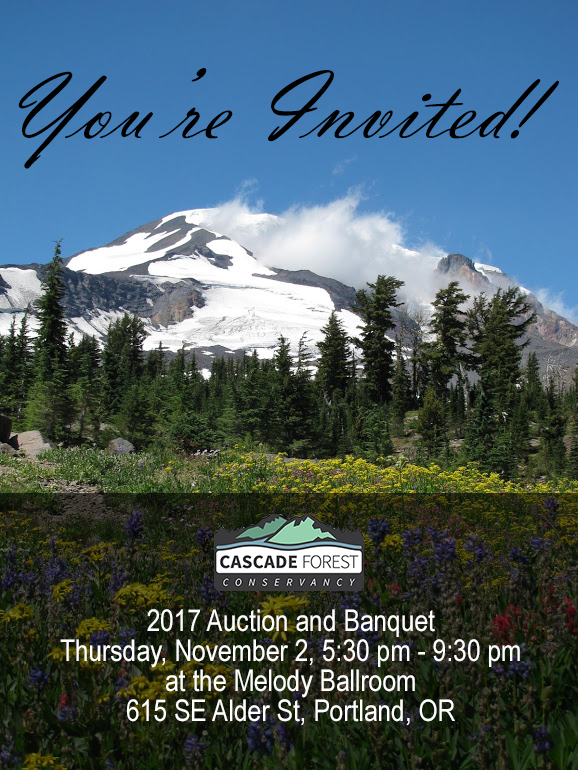
CFC Gala is Coming Up: Join Us Nov. 2

[/vc_column_text][vc_separator type=”normal” color=”#444444″ thickness=”3″][vc_column_text]Did you know that our fall banquet on November 2 is our biggest and most exciting event of the year? Come celebrate a year of challenges and successes with us on November 2 at the Melody Ballroom in Portland! You’ll enjoy delicious food and drink, great deals and pleasant company – all while supporting CFC’s important conservation work. Check out the event website here for details and to sign up.
We’ll start things with a cocktail reception (open bar!) and silent auction at 5:30, followed by a dinner and live auction around 7:00. The auction is not to be missed. We have dozens of items and our guests are always going home with great deals on outdoor gear, artwork, wine and spirits, vacations, sports and theater tickets, and much more. The proceeds from this event are essential to our conservation programs — if you care about the forests, rivers, wildlife and communities of the Cascades, please consider joining us for this fun evening.
invitegraphic[/vc_column_text][/vc_column][vc_column width=”1/12″][/vc_column][/vc_row]

June Newsletter

[vc_row row_type=”row” use_row_as_full_screen_section=”no” type=”full_width” angled_section=”no” text_align=”left” background_image_as_pattern=”without_pattern” css_animation=””][vc_column width=”1/12″][/vc_column][vc_column width=”5/6″][vc_separator type=”normal” color=”#444444″ thickness=”3″][vc_column_text]

Drink a beer, stop a mine!

[/vc_column_text][vc_separator type=”normal” color=”#444444″ thickness=”3″][vc_column_text]Come join us next Wednesday at 6:30pm at Base Camp Brewing to hear the latest on the Mount St. Helens mine proposal and win a $100 Columbia Sportswear gift certificate and cool outdoor gear.  We expect a final decision on exploratory drilling permits for this pristine river valley any day now, so please join us as we mobilize local, state, and national opposition to this terrible idea.  So far, we have sent tens of thousands of your petitions and postcards to the Forest Service and our senators, asking to stop this permit.  We also worked with the Trust for Public Land, who originally owned the land, and other partners to argue for the protection of the unique ecological and recreational values of the valley, and the integrity of the Land and Water Conservation Fund — which funded the private land transfer to the Forest Service.  Come learn more about this, and how you can help stop this mine.
Join the Facebook event by clicking here.  See you next Wednesday![/vc_column_text][vc_empty_space][vc_separator type=”normal” color=”#444444″ thickness=”3″][vc_column_text]

Road Restoration in the Gifford Pinchot

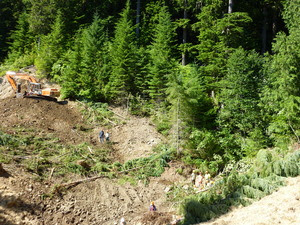
[/vc_column_text][vc_separator type=”normal” color=”#444444″ thickness=”3″][vc_column_text]Road restoration can offer many benefits for wildlife and ecosystems. People also benefit from an improved and simplified national forest road system! Road restoration can include everything from updating and repairing roads to closing or fully decommissioning them.
August 2011 CSP Field Tour 027 (1)Presently, there are over 4,000 miles of roads in the Gifford Pinchot National Forest, enough to go to Texas and halfway back. Many of these are not used or needed but remain on the system, impacting wildlife in a variety of ways. Roads can fragment habitat, increase sediment in streams, block stream connectivity, and increase the spread of invasive plants. Also, when there are too many roads to maintain, they can end up washing out, which can affect fish and wildlife populations, water quality and access to our favorite places in the forest.
Climate change is likely to exacerbate many of the negative impacts from roads, especially by increasing the amount and severity of high streamflow events. We need to work to ensure that our road network is resilient to these projected changes.
Click here to read the full blog post on our website! [/vc_column_text][vc_empty_space][vc_separator type=”normal” color=”#444444″ thickness=”3″][vc_column_text]

Upcoming Citizen Science Trips with CFC!

[/vc_column_text][vc_separator type=”normal” color=”#444444″ thickness=”3″][vc_column_text]Join Cascade Forest Conservancy on one of our upcoming trips into the Gifford Pinchot!  It is a chance to get out into the forest and do some good, as well as meet great people and explore our natural world.
Our planned trips for July include:

  • July 8 (Sat): Survey of Streams and Forest Roads – Tour remote forest roads and streams near Wind River and Trapper Creek Wilderness to collect important field data on stream culverts, forest road conditions, erosion, and fish passage.
  • July 15-16 (Sat-Sun): Timber Sale Survey – Help us collect on-the-ground information for upcoming sales that will increase our understanding of the ecological effects. This trip will take place in the timber sale units south of Packwood, WA, near Spirit Lake and Iron Creek.

To sign up for a trip, visit https://cascadeforest.org/get-involved/trip-sign-up/![/vc_column_text][vc_empty_space][vc_separator type=”normal” color=”#444444″ thickness=”3″][vc_column_text]

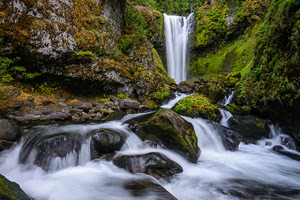
CFC Favorite Hikes: Falls Creek Falls

[/vc_column_text][vc_separator type=”normal” color=”#444444″ thickness=”3″][vc_column_text]

Hiking along Falls Creek Falls trail to the base of a waterfall is a great way to spend a hot summer day. This family-friendly hike crosses a suspension bridge and ends with fantastic views of Falls Creek Falls. Look closely for wildlife like otters and elk. If you want to see more waterfalls, consider visiting nearby Panther Creek Falls.
Distance: 3-7 miles roundtrip, depending on route.
Location: Mt. Adams Ranger District – Oldman Pass
How to get there: Take I-84 to Exit #44/Cascade Locks. Cross the Bridge of the Gods ($2 toll) and turn right toward Stevenson. Turn left onto the Wind River Highway toward Carson. A little after milepost 14, look for the Falls Creek Falls sign and turn right onto road #3062. Drive on this gravel road for about 2 miles until you reach a parking area and the trailhead.
[needs picture – we don’t have any on file but could just google]
spacer.gif

1405811121-Falls-Creek-Falls-Wind-R-WA-4
© Bryan Swan

[/vc_column_text][vc_empty_space][vc_separator type=”normal” color=”#444444″ thickness=”3″][vc_column_text]

Welcome New Staff!

[/vc_column_text][vc_separator type=”normal” color=”#444444″ thickness=”3″][vc_column_text]

Keasberry_Picture
Amanda Keasberry
We’d like to welcome Amanda Keasberry to the Cascade Forest Conservancy team!  Amanda will be joining as our Fieldwork Coordinator, bringing with her a strong background in forest research and spatial analysis.  She’ll be working on the huckleberry monitoring project, leading riparian planting trips, and coordinating some of our citizen science work.

[/vc_column_text][vc_empty_space][/vc_column][vc_column width=”1/12″][/vc_column][/vc_row]

April Newsletter

[vc_row row_type=”row” use_row_as_full_screen_section=”no” type=”full_width” angled_section=”no” text_align=”left” background_image_as_pattern=”without_pattern” css_animation=””][vc_column width=”1/12″][/vc_column][vc_column width=”5/6″][vc_separator type=”normal” color=”#444444″ thickness=”3″][vc_column_text]

Save Our Public Lands!

[/vc_column_text][vc_separator type=”normal” color=”#444444″ thickness=”3″][vc_column_text]Public lands are treasured places to reconnect with nature and with each other. These lands, owned by all Americans, provide essential fish and wildlife habitat as well as incredible places to enjoy camping, hiking fishing, and other recreational activities. Unfortunately these lands are under threat by legislation, backed by corporate interests, which would loosen environmental protections and even transfer public lands to state ownership. Transferring public lands to states would lead to many of these lands being sold to private interests as the expenses to maintain these lands would overwhelm state governments.
The Cascade Forest Conservancy believes that public lands, and the irreplaceable benefits they provide, should remain in public ownership for future generations to enjoy. Join us in our efforts to protect our public lands by signing our petition to Congresswoman Herrera-Beutler. https://cascadeforest.org/get-involved/take-action/
We need your help to pass these important reforms![/vc_column_text][vc_empty_space][vc_separator type=”normal” color=”#444444″ thickness=”3″][vc_column_text]

Mine Update: Green River Listed As Endangered!

[/vc_column_text][vc_separator type=”normal” color=”#444444″ thickness=”3″][vc_column_text]
The Green River valley near Mount St. Helens is still under threat from a risky hardrock mining proposal. Due to this ongoing threat, the Green River was listed as #6 on America’s Most Endangered Rivers® 2017 by American Rivers. This mine would risk polluting public lands intended for conservation and recreation, and pristine waters providing important habitat for wild steelhead. We need your help to protect the Green River valley from mining! Read more about our listing and take action here.
 https://www.americanrivers.org/endangered-rivers/green-toutle-river-wa/[/vc_column_text][vc_empty_space][vc_separator type=”normal” color=”#444444″ thickness=”3″][vc_column_text]

CFC Favorite Hikes for 2017

[/vc_column_text][vc_separator type=”normal” color=”#444444″ thickness=”3″][vc_column_text]Spring is arriving in the Gifford Pinchot National Forest, and it’s time to hike! Cascade Forest Conservancy staff, board, and friends have compiled a list of our favorite hikes to share some of the forest’s special places. With mountain views, waterfalls, big trees, and volcanic landscapes, there is a hike for everyone to enjoy. We hope you experience the beautiful and diverse landscapes of the GPNF, and find a new reason to love the forest. https://cascadeforest.org/get-involved/favorite-hikes/[/vc_column_text][vc_empty_space][vc_separator type=”normal” color=”#444444″ thickness=”3″][vc_column_text]

The Science Behind Conservation: Habitat Connectivity in the Cascades

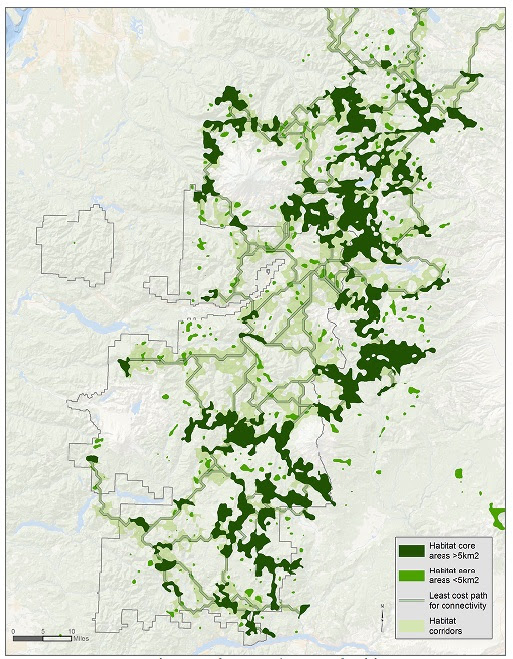
[/vc_column_text][vc_separator type=”normal” color=”#444444″ thickness=”3″][vc_column_text]Connectivity is the ability of wildlife to move throughout the landscape and to access important patches of habitat. Connectivity can be impacted by roads, logging, development, changes in habitat type, and climate impacts on forests, streams, or species. Fragmentation of wildlife habitat and shifting plant and animal populations as a result of climate change will put the wildlife of the Pacific Northwest at risk. Understanding habitat connectivity and planning conservation actions accordingly is one of our goals at the Cascade Forest Conservancy, and can help mitigate climate impacts and help local ecosystems adapt. CFC’s Wildlife and Climate Resilience Guidebook (found here) outlines connectivity needs and highlights strategies for improving ecosystem resilience.
Connectivity_Map (1)
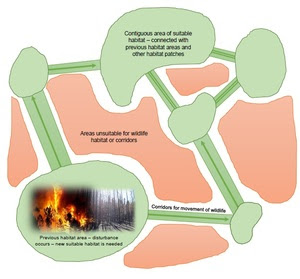
Connectivity represents the critical arteries sustaining the ecosystem. Robust connectivity throughout the landscape makes wildlife populations more resilient to climate impacts by allowing movement to alternate habitat areas and decreasing the degree to which disturbance in a particular habitat patch affects the overall viability of the population. As forest ecosystems move due to climate change, oftentimes shifting to higher elevations and northward, this forces species migrations and population shifts. These changes will be exacerbated and sometimes caused by local disturbances like wildlife or drought, and by the decoupling of species relationships. For example, as certain wetland vegetation disappears, the bird and insect species that depend on them also suffer and become scattered in distant patches. We must provide room to allow species and population movements to occur and not be hindered by geographic bottlenecks.
CFC designed a region-wide connectivity analysis to assist in conservation planning and to help prioritize resilience-building efforts for species that live in old forest habitats. Our analysis identified core habitat areas and potential connectivity corridors. The parameters we set are broad enough to encompass many species yet focused enough to be effective for the individual conservation needs of each one. The species we considered for this connectivity analysis included: fisher, northern spotted owl, marten, northern flying squirrel, and pileated woodpecker. While the particular habitat needs and preferences of each species varies, there are commonalities and it is in this area of common ground where we focused our analysis.connectivity diagram 2
Mapping these patterns is an important step in understanding the need for and placement of habitat corridors and the areas where efforts are needed to protect, sustain, and improve connectivity. Although not explicitly modeled, this connectivity analysis should also provide connectivity for plants, insects, and other wildlife that depend on mature forest habitat. Moreover, the species we focused on often serve as dispersers of seeds and can therefore support plant populations and improve resilience through their distribution.
If you are interested in learning more about habitat connectivity, download our Wildlife and Climate Resilience Guidebook [here], or go on one of our summer stewardship trips with CFC Conservation Science Director Shiloh Halsey![/vc_column_text][vc_empty_space][vc_separator type=”normal” color=”#444444″ thickness=”3″][vc_column_text]

New Member Spotlight

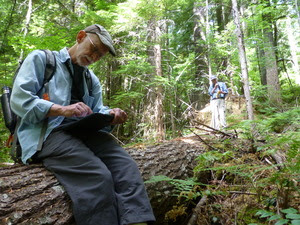
[/vc_column_text][vc_separator type=”normal” color=”#444444″ thickness=”3″][vc_column_text]Every week we are lucky to have new members join us in our mission to protect the places we love. Bob Robison started volunteering on our wildlife camera surveys and other trips three years ago, and has been a regular member of our volunteer team since then. Last week he made a donation online to become P1000687 2a member, joining over three thousand other local residents who protect our forest, rivers and wildlife. A retired public administrator, here’s what Bob says about us: “CFC’s stewardship trips are fun and I learn something new each time! I love being out in our local forests and I think the Cascade Forest Conservancy is effective because they have productive relationships with the Forest Service and make decisions based on sound science and data.”
Thank you, Bob!
Our community of members and their support is what allows us to advocate for protecting our forests and rivers, lead fun and meaningful trips for kids and adults, and organize our community against projects like the Mount St. Helens Mine. If you aren’t already a member, please join here: www.cascadeforest.org/donate[/vc_column_text][vc_empty_space][vc_separator type=”normal” color=”#444444″ thickness=”3″][vc_column_text]

CFC Field Trips!

[/vc_column_text][vc_separator type=”normal” color=”#444444″ thickness=”3″][vc_column_text]Now is the time to sign up for field trips before they fill up!  It is an excellent chance to get out into the forest and do some good, as well as meet great people and explore our natural world.  Learn about the current trips, and sign up, on our website: https://cascadeforest.org/get-involved/trip-sign-up/[/vc_column_text][vc_empty_space][/vc_column][vc_column width=”1/12″][/vc_column][/vc_row][vc_row row_type=”row” use_row_as_full_screen_section=”no” type=”full_width” angled_section=”no” text_align=”left” background_image_as_pattern=”without_pattern” css_animation=””][vc_column][/vc_column][/vc_row]

February 2017 Newsletter

[vc_row row_type=”row” use_row_as_full_screen_section=”no” type=”full_width” angled_section=”no” text_align=”left” background_image_as_pattern=”without_pattern” css_animation=””][vc_column][vc_single_image image=”428″ img_size=”full” alignment=”center” qode_css_animation=””][/vc_column][/vc_row][vc_row row_type=”row” use_row_as_full_screen_section=”no” type=”full_width” angled_section=”no” text_align=”left” background_image_as_pattern=”without_pattern” css_animation=””][vc_column][vc_empty_space][/vc_column][/vc_row][vc_row row_type=”row” use_row_as_full_screen_section=”no” type=”full_width” angled_section=”no” text_align=”left” background_image_as_pattern=”without_pattern” css_animation=””][vc_column width=”1/12″][/vc_column][vc_column width=”5/6″][vc_separator type=”normal” color=”#444444″ thickness=”3″][vc_column_text]

Help Us Reform Suction Dredge Mining Laws

[/vc_column_text][vc_separator type=”normal” color=”#444444″ thickness=”3″][vc_empty_space][vc_column_text css=”.vc_custom_1487280550538{padding-right: 5px !important;}”]

The Cascade Forest Conservancy has been working with our partners to protect Washington’s watersheds and critical fish populations from the harmful effects of suction dredge mining. Early in the 2017 legislative session, two bills were introduced in the Washington State House of Representatives that would implement much-needed reforms to suction dredging mining regulations. In January we testified in support of these bills in Olympia. Please contact your Washington State representatives and urge them to vote YES on HB 1077 and HB 1106, especially Rep. Brian Blake, the Chair of the Natural Resources Committee for these bills, representing the 19th District. You can find contact info for your local WA rep here. Learn more about our efforts to reform suction dredge mining regulations here.

Suction dredge mining releases a plume of sediment downstream, along with the toxic metals that were previously settled out of the water column. This activity also harms fish habitat by vacuuming up the river bottom and destroying redds and refugia. Take a look at Rogue Riverkeeper’s pamphlet on suction dredge mining here for more detailed information. Hundreds of millions of dollars have been spent on fish habitat restoration throughout the state, and these investments can be destroyed in moments by a miner with a suction dredge. In Washington this practice is allowed without oversight, tracking, or accountability. A miner only needs to have a copy of the Gold and Fish pamphlet – no permits, fees, or monitoring required.

HB 1077 will require the Washington Department of Fish and Wildlife to begin tracking and monitoring all suction dredging activities individually and remove motorized mineral prospecting from programmatic coverage under the Gold and Fish pamphlet.

HB 1106 will require miners to comply with the Clean Water Act and obtain individual permits through the Washington State Department of Ecology.

We need your help to pass these important reforms!

[/vc_column_text][vc_empty_space height=”35px”][/vc_column][vc_column width=”1/12″][/vc_column][/vc_row][vc_row row_type=”row” use_row_as_full_screen_section=”no” type=”full_width” angled_section=”no” text_align=”left” background_image_as_pattern=”without_pattern” css_animation=””][vc_column width=”1/12″][/vc_column][vc_column width=”5/6″][vc_column_text]

CFC Volunteers’ Work Leads to Road Restoration 

[/vc_column_text][vc_separator type=”normal” color=”#444444″ thickness=”3″][vc_empty_space][vc_column_text]

Forest roads are passageways to the heart of many of my favorite parts of the Gifford Pinchot National Forest. Some of the most amazing places I’ve encountered in the forest are merely stops along a remote forest road.
The road system of the GPNF, though, is out of date, too large to maintain, and starting to significantly impact both aquatic and terrestrial habitats. At the moment, the GPNF has over 4,000 miles of system road! This is quite high for a national forest, yet the recent rate of road closure here has been very low. The goal of our road surveys and advocacy is to identify the roads that are causing the most negative impact on ecosystems, highlight roads at-risk for failure, consider current access needs and preferences, and prioritize road segments for closing, decommissioning, and repair. 20160724_103652 2
In a recent management plan for the GPNF, the Forest Service proposed road restoration in the Upper Lewis River area, northeast of Indian Heaven Wilderness. The Upper Lewis River Roads Pilot Project is a plan to repair degraded roads, block unclassified roads, and close or decommission about 17 miles of road. We are glad to report that the work of our road survey volunteers (which was carried out in 2014, 2015, and 2016) was instrumental in identifying priority roads for closure. The plan also outlines steps to properly block the unclassified routes that have been illegally reopened through OHV use and the circumventing of blockades. These unclassified roads were documented and mapped by volunteers during our road surveys in 2015 and 2016. Thank you to all of you who took part in these efforts!
Our official comment letter can be found here, our 2016 road survey report can be found here, and the Forest Service’s draft decision can be found here.
– Shiloh Halsey, Conservation Science Director

[/vc_column_text][vc_empty_space][/vc_column][vc_column width=”1/12″][/vc_column][/vc_row][vc_row row_type=”row” use_row_as_full_screen_section=”no” type=”full_width” angled_section=”no” text_align=”left” background_image_as_pattern=”without_pattern” css_animation=””][vc_column width=”1/12″][/vc_column][vc_column width=”5/6″][vc_column_text]

Bear Creek Decision Notice Signed

[/vc_column_text][vc_separator type=”normal” color=”#444444″ thickness=”3″][vc_empty_space][vc_column_text]In January, the Forest Service signed the Decision Notice for the Bear Creek Restoration Thin. Throughout the development of this project we worked closely with members of the South Gifford Pinchot Collaborative and Forest Service staff to develop a proposal that improves fish and wildlife habitat, protects water quality, and benefits local communities. We supported many components of this project including thinning in dense plantation stands, culvert replacement, and road decommissioning. Although we were concerned with proposed heavy thinning in near spotted owl historic nest sites, we were able to resolve these concerns through conversations with other collaborative members. We agreed on a modified proposal that reduced thinning near historic nest sites, lessening the risk to spotted owls and their prey species. Learn more about this project here.[/vc_column_text][vc_empty_space][/vc_column][vc_column width=”1/12″][/vc_column][/vc_row][vc_row row_type=”row” use_row_as_full_screen_section=”no” type=”full_width” angled_section=”no” text_align=”left” background_image_as_pattern=”without_pattern” css_animation=””][vc_column width=”1/12″][/vc_column][vc_column width=”5/6″][vc_column_text]

Sign Our Petition to Senator Cantwell

[/vc_column_text][vc_separator type=”normal” color=”#444444″ thickness=”3″][vc_empty_space][vc_column_text]Please urge Senator Cantwell to permanently protect the Green River valley from mining. With your support, this treasured piece of public land near Mount St. Helens can be protected from dangerous mining proposals. Sign our petition and watch our video here.
[/vc_column_text][vc_empty_space][/vc_column][vc_column width=”1/12″][/vc_column][/vc_row][vc_row row_type=”row” use_row_as_full_screen_section=”no” type=”full_width” angled_section=”no” text_align=”left” background_image_as_pattern=”without_pattern” css_animation=””][vc_column width=”1/12″][/vc_column][vc_column width=”5/6″][vc_column_text]

Board and Staff Transitions

[/vc_column_text][vc_separator type=”normal” color=”#444444″ thickness=”3″][vc_empty_space][vc_column_text]We have bittersweet news from our board of directors. Jurgen Hess is stepping down from his role as Director after many years of dedication to our organization and our mission to protect the forests, streams, wildlife and communities in the heart of the Cascades.  He will be missed, but will remain active with Friends of Mt. Adams and other groups. Thank you Jurgen!
On the other hand, we are thrilled that John Miller will be joining our Board. John is a nonprofit management and development consultant with more than 30 years’ experience leading and growing organizations. His connection to the Gifford Pinchot started in 1972, when his family first camped on Yale reservoir, escaping the hot summer days in the forests flanking Mt. St. Helens. His parents fell in love with the area and built a log cabin near Cougar, which he still escapes to for play, relaxation and, occasionally, a quiet office away from the bustle of Portland.
Please also welcome our new staff! We recently expanded our canvass team (Angela Azure and Lusia Zaleskaya) and hired a new Data and Office Manager (Rochelle Hart).
    [/vc_column_text][vc_empty_space][/vc_column][vc_column width=”1/12″][/vc_column][/vc_row]

December 2016 Newsletter

[vc_row row_type=”row” use_row_as_full_screen_section=”no” type=”full_width” angled_section=”no” text_align=”left” background_image_as_pattern=”without_pattern” css_animation=””][vc_column][vc_single_image image=”94″ img_size=”full” alignment=”center” qode_css_animation=””][/vc_column][/vc_row][vc_row row_type=”row” use_row_as_full_screen_section=”no” type=”grid” angled_section=”no” text_align=”left” background_image_as_pattern=”without_pattern” css_animation=””][vc_column][vc_empty_space height=”50px”][vc_separator type=”normal” color=”#444444″ thickness=”3″][vc_column_text]

Message from our Executive Director

[/vc_column_text][vc_empty_space height=”25″][vc_column_text css=”.vc_custom_1481298993550{margin-right: 0px !important;padding-right: 0px !important;}”]

Dear friends,

I hope you are enjoying the holiday season! I know that many of you are worried about the recent elections and wondering how our special places and species will survive the next Congress and Administration. I want to provide a message of hope.

First, we’ve seen this before. When the Bush Administration came in, we thought all our nation’s environmental laws would be demolished. They weren’t. If you were part of the environmental movement then like I was, you remember that this was because we put up a good fight and were a force to be reckoned with. Not on our watch was our motto!

We need this kind of feisty optimism again. We have incredible power when we work together. When it comes down to it, most Americans believe strongly in preserving our public lands and sensitive species that don’t have a voice or pocketbook. We represent all that’s good and beautiful, and a legacy for our children. Nobody can stop that.

There will be fights to protect the Endangered Species Act. Fights to keep our public lands public. Fights to protect natural resources from being over-exploited. But we will win, and we will do it as a team.

We will need to reach across the urban/rural divide and find the common values and love of place that we all share. We will need to continue working through our local collaborative groups in the forest, and directly on forest projects that government agencies may not have the funding or priority to do.

How can you help? Please take action when we send you opportunities to help stop the mine or protect the forest. Join us in the field as we lead restoration projects to improve forest health. And, please donate: https://cascadeforest.org/donate/. Groups like ours will need more staff and resources to accomplish what we’ll need to do.

Thank you for your support. Have hope, take part, join together and conservation will prevail.

Happy Holidays!

– Matt Little

[/vc_column_text][vc_empty_space height=”35px”][/vc_column][/vc_row][vc_row row_type=”row” use_row_as_full_screen_section=”no” type=”grid” angled_section=”no” text_align=”left” background_image_as_pattern=”without_pattern” css_animation=””][vc_column][vc_column_text]

New huckleberry monitoring project in 2017

[/vc_column_text][vc_separator type=”normal” color=”#444444″ thickness=”3″][vc_empty_space height=”25″][vc_column_text]It has been an exciting year of restoration and data collection in the Gifford Pinchot National Forest. We’ve had the opportunity to meet many new stewards and work with new partners in our efforts to build stronger community connections and improve forest management in the region. We are now in the midst of planning next year’s field season and we have some great new projects lined up!
We have recently received word that we will be partnering with the Pinchot Partners collaborative group to carry out post-management monitoring of huckleberry restoration sites. Huckleberry picking is an important activity for local communities and forest visitors. It is also a traditional harvesting activity for Native American groups, many of which take part in our forest collaborative process. Our work will entail taking measurements of huckleberry growth after Forest Service thinning work has been completed, as well as establishing photo points at future restoration sites. We will be measuring plant density and size, fruiting, disturbance, and regrowth of surrounding vegetation. Our work will be coupled with efforts of other collaborative members to identify which treatment approaches have been most effective and what areas are best suited to thinning treatments for huckleberry restoration. We will be reaching out to our members to help with the monitoring project, so please stay tuned!
We have also solidified plans for a large riparian restoration project. Cascade Forest Conservancy staff and volunteers will be planting hardwood and conifer trees along streams that are expected to warm with climate change. This work will support habitat for bull trout, steelhead, salmon, and other aquatic species. This is the first step of our comprehensive aquatic restoration plan. We will keep you updated as other parts of the plan are unveiled.
Displaying [/vc_column_text][vc_empty_space height=”35px”][/vc_column][/vc_row][vc_row row_type=”row” use_row_as_full_screen_section=”no” type=”grid” angled_section=”no” text_align=”left” background_image_as_pattern=”without_pattern” css_animation=””][vc_column][vc_column_text]

Recap: CFC 2016 gala

[/vc_column_text][vc_separator type=”normal” color=”#444444″ thickness=”3″][vc_empty_space height=”25″][vc_column_text]On November 3rd we celebrated the past year’s successes and our historic name-change to the Cascade Forest Conservancy at the Columbia Sportswear store in downtown Portland. Thank you to everyone who attended and congratulations to our Volunteer of the Year, Michael Sulis, and the many auction winners! The night was a great success – we raised nearly $34,000 for our programs, like the campaign to stop a dangerous mine near Mount St. Helens. People took home rafting trips, sports apparel, artwork and all sorts of great items. We hope to see you at next year’s event![/vc_column_text][vc_empty_space height=”35px”][vc_row_inner row_type=”row” type=”full_width” text_align=”left” css_animation=””][vc_column_inner width=”1/3″][vc_single_image image=”2151″ img_size=”medium” qode_css_animation=””][/vc_column_inner][vc_column_inner width=”1/3″][vc_single_image image=”2152″ img_size=”medium” qode_css_animation=””][/vc_column_inner][vc_column_inner width=”1/3″][vc_single_image image=”2150″ img_size=”medium” qode_css_animation=””][/vc_column_inner][/vc_row_inner][vc_empty_space height=”25″][/vc_column][/vc_row][vc_row row_type=”row” use_row_as_full_screen_section=”no” type=”grid” angled_section=”no” text_align=”left” background_image_as_pattern=”without_pattern” css_animation=””][vc_column][vc_column_text]

Profile: Mark Buchweitz, Canvass Team Manager

[/vc_column_text][vc_separator type=”normal” color=”#444444″ thickness=”3″][vc_empty_space height=”25″][vc_column_text css=”.vc_custom_1481222158450{padding-right: 5px !important;}”]

If someone had told me years ago that I would be going to people’s homes and talking to them about protecting our environment, I would not have believed it. I’m a naturally shy person to begin with, and asking strangers for money is not something that comes naturally to me. But I came to the Northwest to experience the kind of wildlife, streams, mountains and forests that I’d only read about. My home state of Wisconsin has some beautiful forests, but 100 years ago we clear-cut all of our old-growth. When I saw my first old-growth forest it was hard to believe it was real. I couldn’t believe that some people still wanted to cut old growth forests and turn healthy, diverse ecosystems into some sort of wood farm. I wanted to tell people not to make the same mistakes we made in the Midwest! So I decided to work for our forests, first as a canvasser and now as Canvass Team Manager for the CFC.

MARK_NOHOV

I feel privileged to be part of the Cascade Forest Conservancy’s efforts to raise awareness and funds to protect the places that make the Northwest the envy of the rest of our country. Canvassing can be challenging at times, working in the cold, darkness and rain. But meeting so many supportive people makes the job very rewarding. In the challenging political climate we’re about to face, it’s good to know that you can still influence how our forest is managed. So when one of our canvassers comes to your door and interrupts your dinner and family time, please give them a minute to tell you how we’re working to protect the places you treasure – and of course help us with a tax-deductible donation.

And if you can’t donate, become a volunteer! Check out our website for opportunities. https://cascadeforest.org/get-involved/

[/vc_column_text][vc_empty_space height=”35px”][/vc_column][/vc_row]