Water
SAFEGUARDING WATERSHEDS IN SOUTHWEST WASHINGTON
Aquatic Restoration Project Spotlight: relocating beavers
While beaver populations have rebounded in many areas since the end of the fur trade, it is estimated that there are 6 -12 million beavers in North America, which is just a fraction of estimated pre-European levels of 40-600 million. Beavers are a keystone species and a crucial part of our strategy for restoring aquatic habitat and building climate change resilience in the Cascades. Our beaver reintroduction efforts focus on headwater systems where natural recovery has been slow due to habitat fragmentation and the relatively slow pace of upland colonization by beavers. We collaborate with university partners to study the impacts of beaver recovery and the movement patterns of reintroduced beavers to inform future relocation efforts and better understand the role of beavers returning to the landscape.
A Land Shaped by Water and Salmon
The creeks, rivers, and wetlands that make up the complex watersheds in the southern Washington Cascades are vital to the health of the entire region. These systems support threatened salmon and trout, an array of amphibians, birds, and insects, and downstream human communities.
Waterways and aquatic species in southern Washington’s Cascades have been negatively impacted over the years by streamside logging, dams, water pollution, stream “cleanout” activities, and overall habitat degradation. They are now facing increasing threats from climate change, such as rising water temperatures and shifting precipitation and flow patterns, further endangering cold water-dependent species like salmon and steelhead. The health of our watersheds is vital to the health of the entire region. Therefore, CFC works to protect waterways from further damage and restore damaged habitats, leading to healthier and more resilient ecosystems.
- We speak out against attempts to weaken or bypass existing protections and advocate for policies that ensure the long-term health of waterways.
- We assess the potential effects of timber sales and other proposed development projects on aquatic habitats and fight to prevent or minimize adverse impacts.
- We work with partners including the Cowlitz Indian Tribe, Lower Columbia Fish Enhancement Group, the U.S. Forest Service, and individual volunteers on large-scale aquatic restoration projects to improve salmon habitats in the region.
- Other restoration projects like the Instream Wood Bank Network, the construction of beaver dam analogs (BDAs), strategic beaver reintroductions, and planting native tree species along waterways improve aquatic habitats throughout the forest.
Our approach to protecting and restoring aquatic ecosystems
LIMITING IMPACTS FROM LOGGING AND DEVELOPMENT
Streamside logging sends sediment into waterways, impacting fish habitat and water quality, decreasing shade (which exacerbates warming trends), undermining the stability of stream banks, and removing trees that will one day be valuable for instream wood. CFC works to prevent or limit streamside logging through state-level advocacy and by commenting on proposed timber sales, or other actions that harm sensitive aquatic ecosystems.
COLLABORATIVE AND INNOVATIVE APPROACHES TO HABITAT RESTORATION
We work collaboratively to address threats to aquatic ecosystems with partners including restoration professionals, Tribes, local landowners, timber companies, federal and state agencies, and our fantastic volunteers!
Our Instream Wood Bank Network helps source affordable wood for aquatic habitat restoration projects across the region.
CFC is a leader in targeted beaver reintroductions, invasive species management, and the development and implementation of low-tech, process-based restoration techniques.
These efforts improve aquatic habitat for species like salmon and steelhead and make our region healthier and more resilient to the impacts of climate change.
Featured water projects
Introducing the Instream Wood Bank Network
The Insteam Wood Bank Network is an innovative strategy for addressing two major aquatic restoration challenges: the lack of wood in waterways and the lack of reliable sources of materials for restoration professionals in the region.
Improving habitat with Beaver Dam Analogs
Beaver dam analogs (BDAs) are human-made structures designed to mimic many of the ecological benefits of beaver dams. Using natural materials and a lot of hard work, CFC staff and volunteers are improving habitat and building climate resilience by thinking like a beaver.
Searching for Pacific lamprey
Lampreys are ancient fish, but little is known about their current populations in the areas in which we work. We are helping answer questions about lamprey habitat and species presence and testing how new sampling techniques that use environmental DNA compares to traditional detection methods.
SPEAK UP FOR A SUSTAINABLE FUTURE
Since 1985, Cascade Forest Conservancy has been your voice speaking for the areas in and around the Gifford Pinchot National Forest in southwest Washington. Join the 12,000 other members who support Cascade Forest Conservancy and are making a difference now.
News & Updates
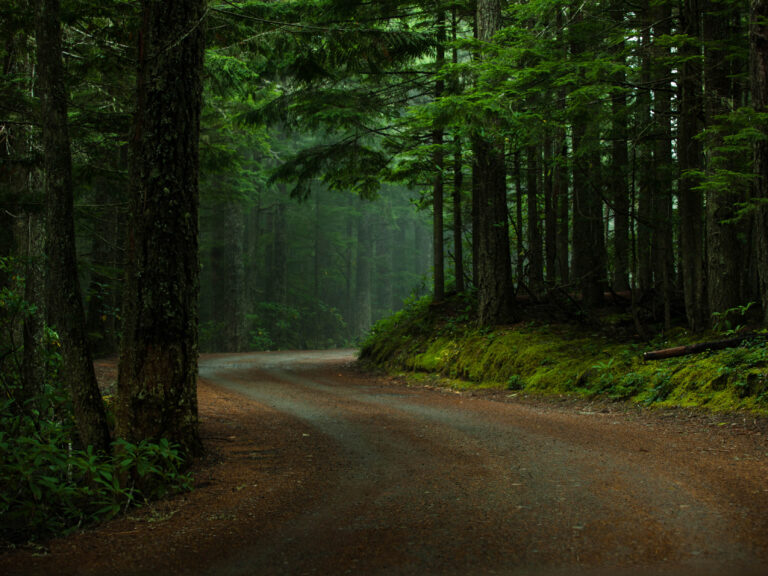
TELL THE FOREST SERVICE TO KEEP THE TRAVEL MANAGEMENT RULE
The U.S. Forest Service is proposing major changes to the Travel Management Rule – the basic policy that determines where motor vehicles can travel on our national forests and grasslands. For more than 20 years, the rule has provided a common-sense approach: local land managers work with communities and forest users to identify which roads,...
FIELD NOTES: JULY 2026
Executive Director’s Note: For decades, logging and mining lobbyists have argued that regulations requiring public input and transparency hold back progress, but on a recent trip to Washington, D.C., I told members of Congress a different story. My message was simple: transparency, accountability, and public input actually make projects more efficient and lead to better outcomes. I pointed to the success...
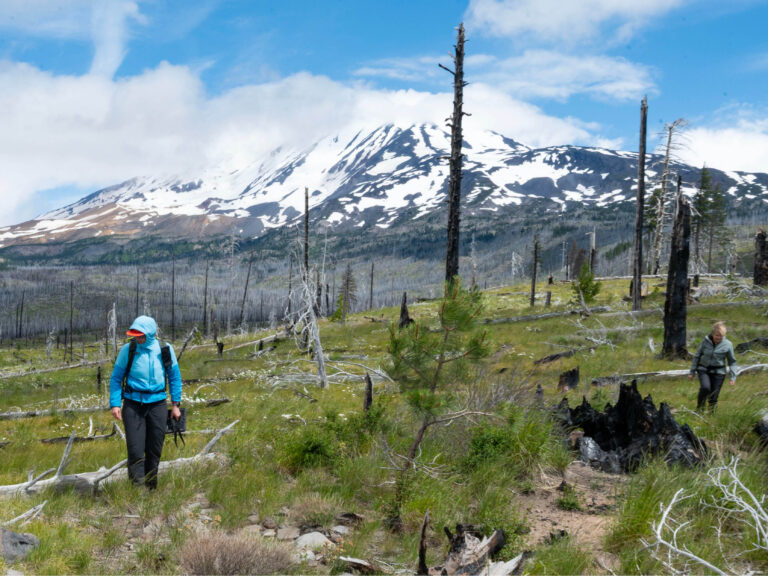
SIGNS OF TROUBLE AND HOPE AT MCDONALD RIDGE
Cascade Forest Conservancy staff, volunteers, and Forest Service botanists recently conducted native plant surveys in wildfire-impacted forests beneath the slopes of Mount Adams. There we observed signs of climate change impacts affecting our forests, but documented examples of how CFC and our community can make a positive impact. On this occasion, we climbed...
Our Work
Volunteer Science and Education
Volunteer Science and Education
Providing volunteers one-of-a-kind opportunities to learn and make a lasting impact
The Green River Valley & Mount St. Helens: No Place for a Mine
The Green River Valley & Mount St. Helens: No Place for a Mine
Our ongoing fight to stop a disasterous open-pit mine in the shadow of Mount St. Helens (Lawetlat'la)