Our Quarantine Reading List (part 2 )

Part two of our quarantine reading list features submissions from Suzanne Whitney and Lucy Brookham. We hope these great reads inspire, intrigue and entertain you as we work together to flatten the curve. Stay safe everyone, we’re in this together.

– The CFC Team


SUZANNE WHITNEY  Science and Restoration Manager


Cod: A Biography of the Fish that Changed the World

by Mark Kurlansky 

This is a fascinating and accessible book that explores the intersections among ecology, human history, food, and conservation. The global impact of this one species is amazing! If it leaves you wanting more, follow up with Four Fish: The Future of the Last Wild Food by Paul Greenberg.


Northwest Trees: Identifying and Understanding the Region’s Native Trees

By Ramona Hammerly and Stephen Arno

While sheltering in place, I’ve been digging into a couple of books to beef up my knowledge of Pacific Northwest species. In particular, I’m enjoying Northwest Trees: Identifying and Understanding the Region’s Native Trees by Stephen Arno. This book includes beautiful illustrations and spends several pages providing deeper information on each species. It’s a great compliment to a comprehensive field guide.


All That the Rain Promises and More…

by David Arora

Want to think about mushrooms instead? All that the Rains Promise and More… is a fun place to start.


Prodigal Summer

by Barbara Kingsolver

A sweet novel that weaves conservation issues (pesticide use, importance of predators, conservation genetics) into a story that connects several members of a small community in southern Appalachia. If you don’t do fiction, Kingsolver also writes lovely essays that combine human experience and her passion for natural history; High Tide in Tucson is a nice collection.


Creation: An Appeal to Save Life on Earth

by E.O. Wilson

If you enjoyed Shiloh’s recommendation of A Sand County Almanac, you could try The Creation: An Appeal to Save Life on Earth by E.O Wilson. This book is a plea from a southern gentleman and one of the greatest minds in ecology in which he makes a case for why conservation should be a priority for religious leaders (and everyone).


Desert Solitare

By Edward Abbey

If you prefer a more radical take, I also love Desert Solitaire by Edward Abbey. Leopold, Wilson and Abbey are very different authors with different motivations, but they all make the case for conservation and preservation in personal ways based on their own life experiences.


LUCY BROOKHAM  Policy Manager


The Book of Fire

by William H. Cottrell

A short and highly illustrated book for all ages – introducing non-scientists to the anatomy of wildfire. Beginning at the molecular level, the book illustrates and describes the process of flame-progression, from how a twig catches fire to how an entire forest burns.
 

Sea and Smoke: Flavors from the Untamed Pacific Northwest

by Blaine Wetzel and Joe Ray

An ambitious cookbook celebrating the cuisine of hyperlocalism inspired by the rugged coastal location of Lummi Island.


The Man Who Planted Trees

by Richard Powers

A poetic and inspiring story of one man’s quest to clone the world’s champion trees in an effort to save the planet’s essential ecosystems. A light and easy read that incorporates forest ecology and storytelling.

Our Quarantine Reading List (part 1)

Looking for something new to read? CFC staff have compiled a list of some of our favorite books to help us all feel connected to the outdoors while we stay inside to fight the spread of the virus. Enjoy, and keep an eye out for part two of our list, coming soon. 


MOLLY WHITNEY  Executive Director


Cadillac Desert by Marc Reisner 

A book that discusses water policy and management in the West, and how this management has largely led to the diminishment and detriment of our water. The book is a mix of research, reporting, and personal experience.


A Walk in the Woods

By Bill Bryson

 Bryson’s book is sure to capture you and take you on the trail with him as he hikes the Appalachian Trail from Georgia to Maine. He narrates in a manner that lets you experience the journey with humor, wonder and knowledge. 


The Lorax

by Dr. Suess

Not all the great environmental reads are complex… Dr. Seuss captures some of the best messages and the plights of the environment through the eyes of the Lorax, a character who “speaks for the trees”. Perfect for children and adults alike, this read will remind you why CFC too “speaks for the trees” and how we all can make a difference toward protecting the places we love. 


BRYN HARDING  Communications Manager


Indians of the Pacific Northwest: From the Coming of the White Man to the Present Day

by Vine Deloria Jr.

The best history out there dealing with the tribes indigenous to the NW. This book helped me better understand the stories of the people and places where I live.


Gifts of the Crow: How Perception, Emotion, and Thought Allow Smart Birds to Behave like Humans

by John M. Marzluff and Tony Angell. 

This book is a fascinating read that will make you appreciate and marvel at the wildlife closest to home in a whole new way.


The Overstory: A Novel

by Richard Powers

This book is an incredible multigenerational tale of activism and resistance told in a totally unique way. It’s hard to describe exactly, but it’s wonderful. Ann Patchett called it “The best novel ever written about trees, and really just one of the best novels, period.”


MICHAL ORCZYK Development Manager

Inside Passage: A Journey Beyond Borders

by Richard Manning

Manning blends biography, history and science into stories about our connection to the natural world. It is very honest and bold, and you will learn some hard truths!


Ever Wild: A Lifetime on Mount Adams

by Darryl Lloyd

A really fascinating book about the history, exploration, and geology of a mountain most people don’t know much about. Darryl lived and worked most of his life at the foot of Mount Adams and he’s a long-time friend of CFC. 


SHILOH HALSEY Director of Programs


Sand County Almanac

by Aldo Leopold

A poetic and monumental conservation book published in the 1940s that eloquently describes the daily and cyclical habits of woodland forest species as well as the policies and approaches to saving threatened species throughout the country. Should be required reading for conservation folks!


Where Bigfoot Walks: Crossing the Dark Divide

by Robert Michael Pyle

A book about a journey through the Gifford Pinchot National Forest. What else do I have to say?


The Big Burn: Teddy Roosevelt and the Fire that Saved America

by Timothy Egan

A book about Teddy Roosevelt, Gifford Pinchot (the person), and their efforts to protect land in the West. It also talks about the great fire that started a cascade of environmental and logging actions in the early part of the 20th century. 


AMANDA KEASBERRY Science and Stewardship Manager


The Invention of Nature 

by Andrea Wulf

Read this book to learn about one of the most adventurous and fascinating naturalists from the 18th century – Alexander von Humboldt. Humbolt was way before his time, and truly understood the interconnectedness of the world around him. 


Plants of the Pacific Northwest Coast

by Jim Pojar and Andy MacKinnon

This is easily my favorite field guide for plants in the PNW. But it is more than just a plant ID book. The “Notes” section for each plant usually features interesting facts like how the plant was discovered, why it has a certain nickname, or how the plant was used among different cultures. 


The Poetic Inventory of Rocky Mountain National Park

edited by Charles Malone

I was on a road trip from Oregon to Alabama and we didn’t have time to stop and hike in the Rocky Mountain National Park, but we did stop at a local bookstore. I found this anthology of fiction, non-fiction and poems about RMNP. Each writer’s passion for the park really shined through. Being able to read this collection was second best to actually being there.

We’re working to protect the world-famous pumice plain

The Pumice Plain created by the 1980 eruption of Mount St. Helens is a place like nowhere else on earth. Unlike the majority of the blast zone, the superheated pyroclastic flows that swept over this area forty years ago sterilized all life, effectively leaving behind an ecologically blank slate. The Pumice Plain created a unique opportunity for scientists and researchers to study nature’s return to a barren landscape in an area that has been protected from human intervention for the past 40 years. There are currently over thirty active research studies helping us understand the process of ecological recolonization to a degree that would be impossible without this site. Now, this proposed project puts all of this in jeopardy.

The US Forest Service has put forward plans to build a road through the heart of this irreplaceable landscape. The proposed road is a threat to the area’s streams, rivers, and lakes. If built, this road will pass over five permanent streams and 10 seasonal streams which together represent five separate watersheds, wholly created after the 1980 eruption. Pristine newborn watersheds like these do not exist anywhere else on earth. The proposed road would lead to soil erosion and deliver harmful sediment into streams and, subsequently, into Spirit Lake. Worse still, each stream-crossing would likely wash out every season, requiring excavation and rebuilding. All this sediment will force aquatic insects and fish to move downstream, negatively impact water quality, and damage stream and lakebed habitats.

If completed, the road would be passed over by 1,980 passenger vehicles, 84 tractor-trailers, 464 single-unit trucks and 6-10 drill rigs every year. The proposed road would need disruptive and damaging annual maintenance, and open the door for the introduction of invasive species onto this pristine landscape. It would also permanently close the Windy Ridge, the Plains of Abraham, and the Truman Trail–disrupting people’s ability to enjoy this world-renown spot through recreational hiking, biking, and hunting.

The need for a new Forest Service road to Spirit Lake is real. The agency needs easier access to important infrastructure around Spirit Lake to prevent overflow and protect downstream communities. However, we believe that there are adequate alternatives that would alleviate many of the negative impacts of the proposed plan while still providing the necessary access. Given the ecological harm the proposed road would cause, CFC is asking the US Forest Service to explore alternatives before committing to a plan that necessitates disruptions to a beautiful, one-of-a-kind landscape.

This isn’t the first time the US Forest Service has proposed building a road here. In fact, it’s the third. This time, the agency announced the plan on December 17, 2019, immediately preceding the winter holidays. Agency staff were out of the office for a majority of the public comment period. The US Forest Service elected to forgo the typical National Environmental Policy Act (NEPA) process by declining to entertain public comment after the final Environmental Assessment (EA) has been published.

We are currently waiting on the final EA and will provide updates as they become available. We have submitted comments (which you can read here) and will continue to advocate for alternatives that leave the Pumice Plains intact and protect the communities near Spirit Lake. You can make a donation in any amount to help support our work here.Continue reading

Good News for Salmon and Steelhead

March 5 2020

Despite the hard work of environmental groups, tribes, state agencies and dedicated volunteers, salmon and steelhead populations have declined or failed to show significant gains in Washington State during recent years. But today, in a bipartisan vote of 37–10, the Washington State Senate passed a bill that may help change that.

A recreational suction dredge mining operations in a Washington stream

ESHB 1261, which had the support of the Cascade Forest Conservancy and more than 160 other businesses, faith-based organizations and nonprofits, will ban suction dredge mining in critical habitat for salmon, steelhead and bull trout across 11,000 miles of streams and rivers beds throughout the state.

Suction dredge mining is a recreational technique that uses gas-powered dredges to vacuum up rocks, sediment, gravel and from creek and riverbeds in search of gold or precious stones. A single suction dredge can move up to 17 cubic yards of gravel every hour. While miners have argued that the practice is harmless, scientific studies have shown that suction dredge mining degrades water quality and destroys important habitat for salmon, steelhead and endangered bull trout. Dredging a river or creek disrupts habitats, harms fish eggs and other animals, and releases sediment that makes streams shallower and warmer–bad conditions for spawning fish. Dredging can also stir up and release toxins and heavy metals trapped under streambeds.

Until now, Washington has been the only Western state to allow suction dredge mining without effective oversight, and as a result, had become a destination for recreational miners from across the region. The bill, which Governor Jay Inslee is expected to sign, will bring Washington’s laws closer to those in neighboring states. This is a big win for struggling fish populations, anglers, and all of us who want to keep the forest, streams and rivers in Washington’s Cascades healthy and wild for future generations.

CFC Welcomes New Policy Manager

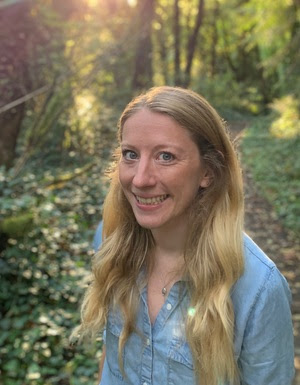
We are very excited to have Lucy Brookham join CFC. Lucy comes to Cascade Forest Conservancy with a diverse background in environmental law and policy. Originally from Hertfordshire, England, Lucy moved to the USA in 2008 to attend college and run for the University of Utah’s track team. An avid runner with a passion for the outdoors, it was her time in Utah that sparked her interest in the protection and conservation of public lands and wild places.

LucyB_CFCLucy spent two years in Philadelphia pursuing a master’s degree before making her way back west to attend Lewis & Clark Law School, where she received her J.D. in Environmental and Natural Resources Law. Before joining Cascade Forest Conservancy, Lucy worked as a law clerk for the Northwest Environmental Defense Center, and Earthrise Law Center.

Here’s what Lucy has to say: “I am thrilled to join the CFC team as the Policy Manager and can’t wait to collaborate with our partners. In this position, I intend to work on supporting grassroots campaigns and improving legislation, policies, and forest management practices that speak directly to protecting and sustaining our iconic landscape in the heart of the Cascades.”

CFC Welcomes Molly Whitney as Executive Director

[vc_row row_type=”row” use_row_as_full_screen_section=”no” type=”full_width” angled_section=”no” text_align=”left” background_image_as_pattern=”without_pattern” css_animation=””][vc_column width=”1/12″][/vc_column][vc_column width=”5/6″][vc_column_text]The Board of Cascade Forest Conservancy is thrilled to announce our selection of Molly Whitney to be our next Executive Director.
Molly comes to Cascade Forest Conservancy with a diverse background in conservation and extensive experience in non-profit leadership, fundraising/development, and program management. Molly’s passion comes from a deep appreciation for Pacific Northwest landscapes and a desire to protect, sustain and restore ecosystems. She holds a bachelor’s degree in environmental science, with a focus in water, from Linfield College.
Prior to joining Cascade Forest Conservancy, Molly served as Development Director at WaterWatch of Oregon, managing the organization’s events and donor relations to secure corporate, foundation and major donor gifts. Molly was previously Program Manager of the National Fish and Wildlife Foundation’s Columbia Basin Water Transactions Program. She is currently the Board President of Tualatin Riverkeepers.
As a native Oregonian, Molly has a lifelong relationship with the Cascade Mountains and brings a sincere enthusiasm for their protection and restoration.
About coming to CFC, Molly writes…
“I am profoundly honored and excited to be joining Cascade Forest Conservancy as Executive Director. This is an incredible opportunity to work with an amazing team of dedicated individuals who devote themselves to the advancement, protection and restoration of forests, streams, wildlife and communities at the core of the Cascades.
Growing up in the Pacific Northwest, I gained a deep appreciation for the vast and diverse ecosystems that encompass the iconic Cascades. This lifelong appreciation turned into my passion and motivated me to devote my career to the betterment of the environment, and to environmental justice. In my new role, I am proud to lead an organization that advocates for these important spaces so they may thrive for generations to come – not only for our enjoyment, but so that nature itself can prosper, in its own right. We are as much of a reflection of these spaces as they are of us.
I look forward to meeting and working with all of you – partners, supporters and advocates – to continue the impactful mission of this small but mighty organization.”
Molly will start with us on May 16th, 2019. After that date, Molly can be reached at molly@cascadeforest.org. Please join us in extending her a warm welcome![/vc_column_text][/vc_column][vc_column width=”1/12″][/vc_column][/vc_row]

Protect Clean Water and Fish in Washington

[vc_row row_type=”row” use_row_as_full_screen_section=”no” type=”full_width” angled_section=”no” text_align=”left” background_image_as_pattern=”without_pattern” css_animation=””][vc_column width=”1/12″][/vc_column][vc_column width=”5/6″][vc_column_text]Washington lags behind neighboring states in protecting our waters from the harmful impacts of suction dredge mining. However, the Washington State Legislature is currently considering SB 5322, which would ban suction dredge mining in critical habitat and provide Washington Department of Ecology oversight for Clean Water Act compliance for suction dredge mining.
Your help is needed. Please contact your Washington State representatives and urge them to enact common sense protections for native fish populations and clean water by voting YES on SB 5322.

Steelhead Critical Habitat in Southwest Washington

Throughout the Gifford Pinchot National Forest there is a network of rivers and streams that provide clean water for communities, fish habitat, and recreation. The Wind, Cispus, Lewis, White Salmon, and the other seemingly endless rivers and tributaries inescapably intertwine clean water with the health of the forest. Clean water is also the foundation of healthy salmon populations. Each year hundreds of millions are spent in an effort to rehabilitate salmonid populations through projects that restore habitat, improve stream shading, and remove barriers to fish passage. Suction dredge mining can undo these efforts in an instant.
Suction dredge mining impacts rivers and threatened fish populations. The process uses a motorized hose system to vacuum up the stream bottom in search of gold. In doing this, suction dredge mining can cause erosion and sedimentation, and mobilize heavy metals that were settled in the sediment. Salmonids are very sensitive to heavy metals due to the impact it has on their sense of smell. Using these machines in riparian areas can also result in localized water contamination and increased stream temperatures due to loss of riparian vegetation. The disruption to the streambed during suction dredge mining also impacts the life cycles of fish by harming eggs and juveniles, destruction of habitat features such as large woody debris, and changing the physical nature of the stream.
 
Recognizing the impact of suction dredge mining on clean water and threatened fish populations, neighboring states have taken action to regulate or ban this activity. Washington has continued to allow suction dredge mining with little regulation, putting our state’s precious waters at risk. Now is the time for Washington to act to regulate suction dredge mining, so we can leave a legacy of healthy watersheds and abundant native fish populations for future generations to enjoy.
Please contact your Washington State representative and urge them to support SB 5322 for our native fish and waters. Find your representative here: https://app.leg.wa.gov/districtfinder/
 
Large suction dredge machinery can harm riparian vegetation

Suction dredge mining results in reduced water quality by sending a plume of sediment downstream.

 
Map via https://www.westcoast.fisheries.noaa.gov/publications/gis_maps/maps/salmon_steelhead/critical_habitat/steelhead/steelhead_lcr_ch.pdf[/vc_column_text][/vc_column][vc_column width=”1/12″][/vc_column][/vc_row]

CFC hiring a new Executive Director

[vc_row row_type=”row” use_row_as_full_screen_section=”no” type=”full_width” angled_section=”no” text_align=”left” background_image_as_pattern=”without_pattern” css_animation=””][vc_column width=”1/12″][/vc_column][vc_column width=”5/6″][vc_column_text]The Cascade Forest Conservancy seeks a full-time, passionate Executive Director to lead forest protection, conservation, education, and advocacy in the lush heart of the Cascade Mountain Ecoregion. The Director is responsible for running and growing the nonprofit organization, telling our compelling story, and expanding our network of strategic partnerships. This hands-on position works closely with CFC staff and Board of Directors, as well as with community leaders in the region. Located in desirable Portland, Oregon metro region. Please see  www.cascadeforest.org/get-involved/employment/ for additional information.[/vc_column_text][/vc_column][vc_column width=”1/12″][/vc_column][/vc_row]

Press Release

[vc_row row_type=”row” use_row_as_full_screen_section=”no” type=”full_width” angled_section=”no” text_align=”left” background_image_as_pattern=”without_pattern” css_animation=””][vc_column width=”1/12″][/vc_column][vc_column width=”5/6″][vc_empty_space][vc_column_text]

Drilling Approved Near Mount St. Helens

[/vc_column_text][vc_empty_space][vc_column_text]FOR IMMEDIATE RELEASE: December 3, 2018
CONTACTS:
Nicole Budine, Policy and Campaign Manager, Cascade Forest Conservancy, 607-735-3753
Matt Little, Executive Director, Cascade Forest Conservancy, 541-678-2322
Tom Buchele, Managing Attorney, Earthrise Law Center, 503-768-6736

Drilling Approved Near Mount St. Helens
Conservation and Recreation Groups Oppose Due to Impacts on Fish, Water Quality and Recreation.

Portland, OR – On December 3, 2018, the Bureau of Land Management granted permits to conduct exploratory drilling in the Green River valley, just outside the Mount St. Helens National Volcanic Monument. The Forest Service issued a similar decision consenting to drilling on these lands in February 2018. A coalition of over 20 conservation and recreation groups opposes the project, claiming mining exploration and development will destroy recreational opportunities in the area, significantly harm wild steelhead populations in the Green River, and pollute the water supply of downstream communities.
“Tens of thousands of people have expressed opposition to this dangerous mining proposal that would impact one of our most treasured National Monuments,” said Matt Little, Executive Director of the Cascade Forest Conservancy. “Approving mining activities along a pristine river that is in the shadow of an active volcano is absurd. We will work with downstream communities, backcountry recreationists, and local concerned citizens to protect this treasured river valley for future generations.”
The drilling permits allow Ascot Resources Ltd., a Canadian mining company, to drill up to 63 drill holes from 23 drill sites to locate deposits of copper, gold, and molybdenum. The project would include extensive industrial mining operations 24/7 throughout the summer months on roughly 900 acres of public lands in the Green River valley, just outside the northeast border of the Monument. The prospecting permits allow for constant drilling operations, the installation of drilling-related structures and facilities, the reconstruction of 1.69 miles of decommissioned roads, and pumping up to 5,000 gallons of groundwater per day.
Some parcels of land in question were acquired to promote recreation and conservation under the Land and Water Conservation Fund Act (LWCFA). In a previous lawsuit filed by the Cascade Forest Conservancy (then the Gifford Pinchot Task Force), a federal judge invalidated Ascot’s drilling permits and held that the agencies violated the LWCFA by failing to recognize that mining development cannot interfere with the outdoor recreational purposes for which the land was acquired. This decision by the BLM and Forest Service to once again issue Ascot drilling permits follows the release of a modified EA in 2017, prepared in response to this prior court decision.
“This project would severely impact recreation opportunities due to noise, dust, exhaust fumes, lights, vehicle traffic, the presence of drill equipment, and project area closures,” said Tom Buchele, Managing Attorney of the Earthrise Law Center. “I cannot fathom how the Forest Service and Bureau of Land Management could legally conclude that drilling would not interfere with recreation without violating the LWCFA.”
The pristine Green River flows through the Mount St. Helens National Volcanic Monument, passing through old growth as well as a unique post-eruption environment that provides habitat for a variety of native fish and wildlife. The Green River flows into the North Fork Toutle River and Cowlitz River, which provides drinking water to thousands of people in downstream communities.
The following coalition voices have expressed their consistent opposition to efforts to develop a mine near Mount St. Helens.
“This prospecting is a threat to wild steelhead in the Green River and the rest of the Toutle and Cowlitz River system,” said Steve Jones, Clark-Skamania Flyfishers. “Washington fisheries managers made the upper Green River a Wild Steelhead Gene Bank in 2014 because this habitat offered the best hope for sustaining wild fish in that system. This river drainage needs to be conserved, not exploited.”
“This is a short-sighted decision that taxpayers will ultimately be forced to fix,” said Kitty Craig, Acting Washington State Director for the Wilderness Society. “Paving the way for industrial mining operations in the blast zone of an active volcano is a recipe for disaster.”
“Mount St. Helens is no place for a mine,” said Tom Uniack, Executive Director for Washington Wild. “The greater economic and social value of this incredible area lies with the equestrian, mountain biking, and other world-class recreational opportunities accessible to local residents and visitors alike.”
“With outstanding recreation, as a wild steelhead sanctuary, and as a source of clean drinking water for downstream communities, the Green River – a candidate Wild and Scenic River – is the last place for a mine,” said David Moryc, Director for Wild and Scenic Rivers for American Rivers. “The Forest Service and Bureau of Land Management should not be green-lighting mining on our public lands that were purchased explicitly for conservation and recreation purposes,”
“The Green River and its downstream rivers the North Fork Toutle River and Cowlitz are home to three species of wild steelhead and salmon listed as threatened under the Endangered Species Act (ESA),” said Rich Simms, founder of the Wild Steelhead Coalition. “This mining project will undermine the immense work being done to protect these imperiled fish. It is absurd this ludicrous project is even being considered, yet alone moving forward for approval.”
 

###

DOCUMENTS:
Bureau of Land Management FONSI: https://eplanning.blm.gov/epl-front-office/projects/nepa/52147/163268/199263/BLM_FONSI_20181002.pdf
Bureau of Land Management Decision Record: https://eplanning.blm.gov/epl-front-office/projects/nepa/52147/163270/199265/BLMDecisionRecord20181002.pdf
Cascade Forest Conservancy Objection Letter: https://cascadeforest.org/wp-content/uploads/2017/10/final-objection-on-letterhead-1.pdf
Judge Hernandez’s Opinion: https://law.lclark.edu/live/files/17566-gifford-pinchot-mining-decisionpdf.
 
MAPS/PHOTOS:
Map of the Project Area: https://cascadeforest.org/wp-content/uploads/2016/09/Map-of-Mt-St-Helens-mine-area-zoomed-in.jpg
Green River Valley photo: https://cascadeforest.org/wp-content/uploads/2018/12/IMG_5183.jpg
Green River: https://cascadeforest.org/wp-content/uploads/2018/12/Green-River-July-2018-015-1.jpg
Green River valley aerial: https://cascadeforest.org/wp-content/uploads/2018/12/IMG_6177.jpg
Green River valley aerial labelled: https://cascadeforest.org/wp-content/uploads/2018/12/GRV-labelled-aerial.jpg
 
VIDEO:
Cascade Forest Conservancy “Mount St. Helens: No Place for a Mine” : https://www.youtube.com/watch?v=JjVk78cVNCk[/vc_column_text][/vc_column][vc_column width=”1/12″][/vc_column][/vc_row]