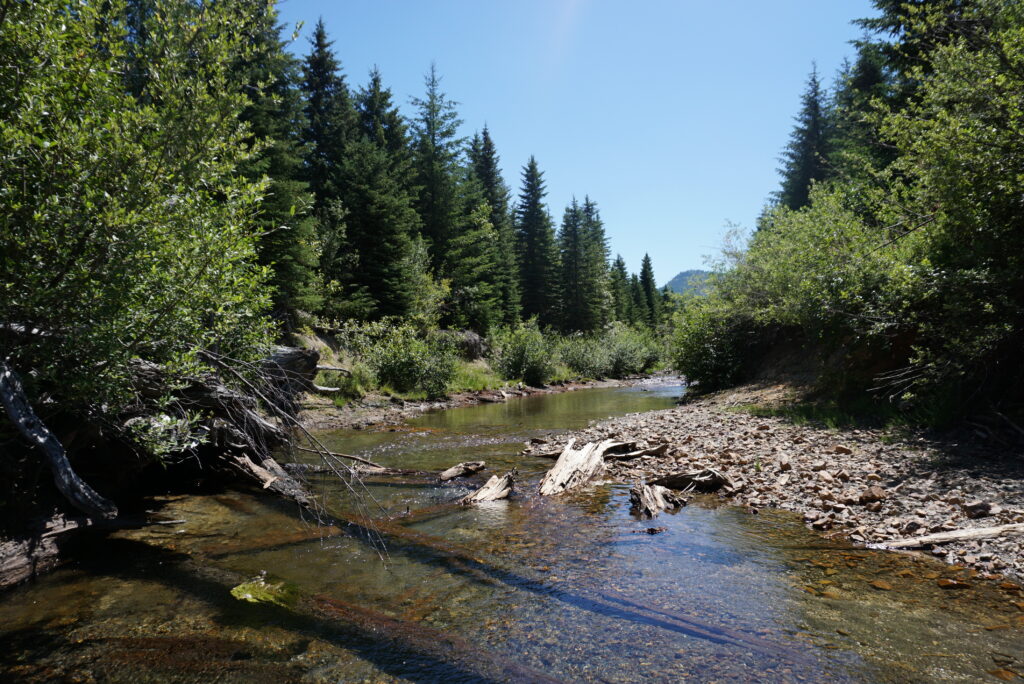
BREAKING: NEW EFFORTS TO DEVELOP A MINE ONCE AGAIN THREATEN MOUNT ST. HELENS

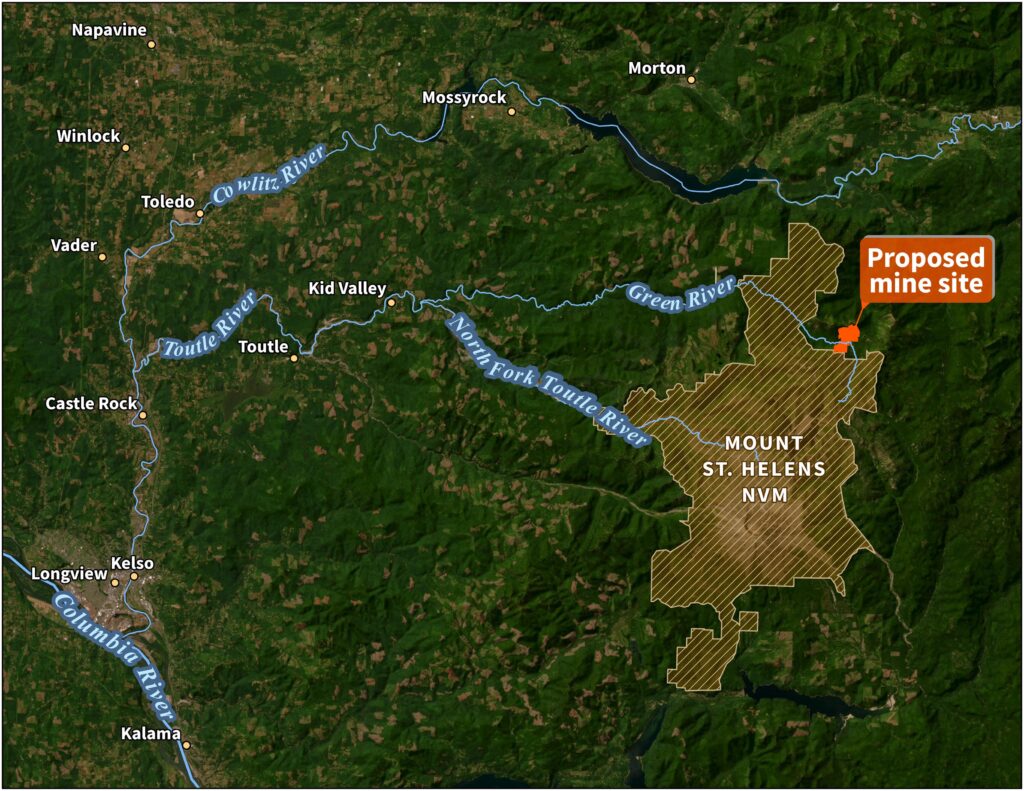
Despite previous legal victories, environmental designations, and local public opinion, a Canadian mining corporation is once again taking steps toward developing a new mine in the foothills of Mount St. Helens, North America’s most active volcano..


The impacts of hard rock mining extend far beyond the locations of mines themselves. Several recent studies of hard rock mines across the U.S. found that all of the mines researchers analyzed degraded ecosystems and polluted surface and ground water.

The threat of long-lasting ecological damage or a life-threatening disaster, such as a tailings pond breach, are even greater in this seismically active corner of southwest Washington.
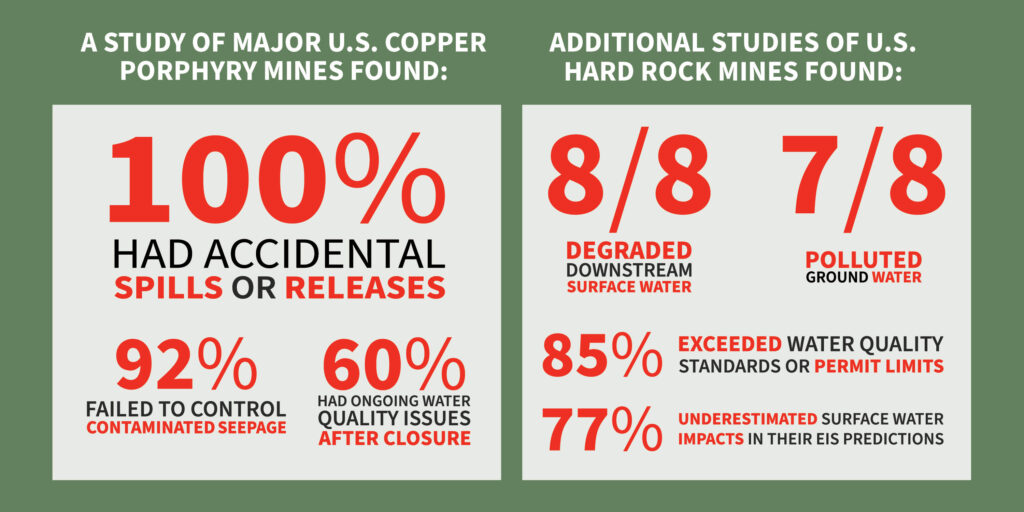


Science and history show that an open-pit mine in the foothills of Mount St. Helens (the most active volcano in the continental U.S.) will pollute clean water, poison wild fish, degrade habitat, and threaten the safety and prosperity of downstream communities.


Mount St. Helens is no place for a mine.


In addition to the unacceptable risks a mine represents for downstream communities, developing a mine in the foothills of Mount St. Helens threatens beloved backcountry areas and vibrant ecosystems in a rich and unique corner of the Cascades.
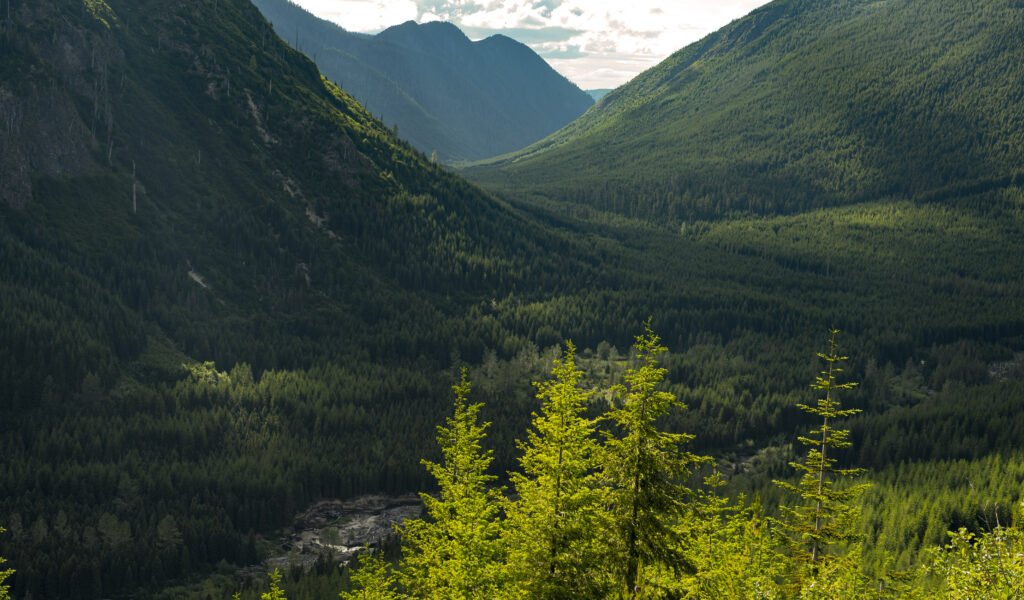
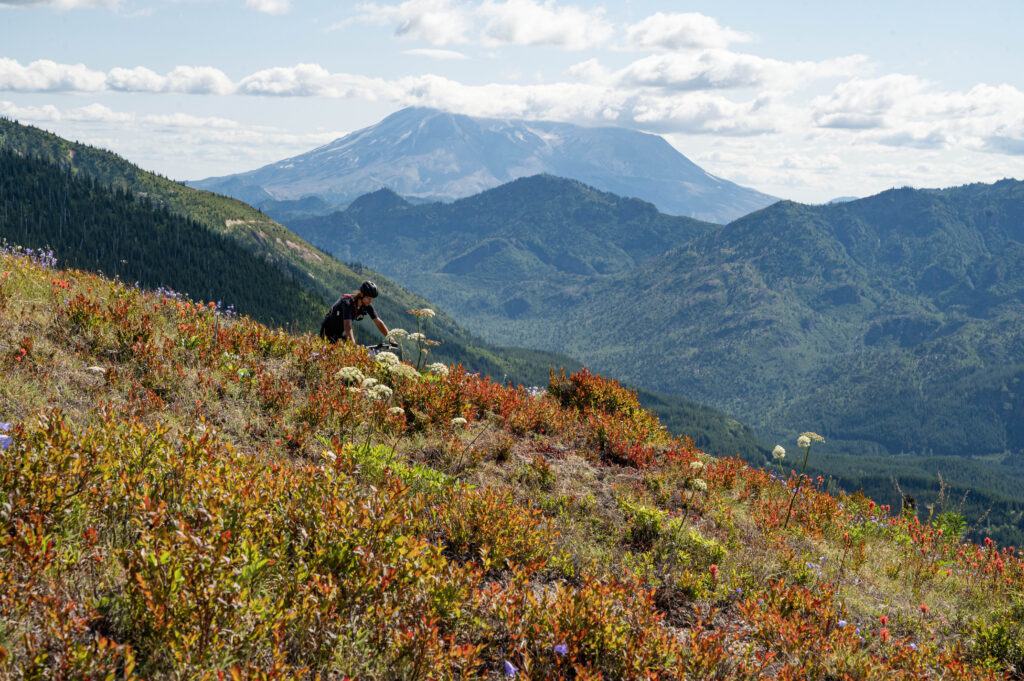
The Green River Valley borders the Mount St. Helens National Volcanic Monument. The headwaters of the Green River and the surrounding landscapes are among the most unique, culturally significant, ecologically pristine, and seismically active found anywhere on Earth.


Local communities and Tribes have consistently opposed proposals to prospect in and around the Green River Valley. The area It contains trails and backcountry loved by hunters, anglers, horseback riders, mountain bikers, hikers, and mushroom foragers in southwest Washington and beyond. For Indigenous communities, including the Cowlitz, Yakama, and others, this landscape carries a deep cultural significance.


The Green River is the only waterway in Washington recognized as both a Gene Bank for wild steel head and an Outstand Resource Water. The clear cool waters of the Green River support a rare population of wild steelhead. Maintaining these fish is key to preserving the genetic diversity of the species currently facing increasing pressures from climate change.


What we know so far:


  • Cambria Gold Mines (formerly Ascot Resources), a Canadian mining corporation, announced that it plans to form an American subsidiary to renew efforts to develop a new mine in this location.

  • We are in the very early stages of this fight. No other public information, including information about exploratory drilling permit applications, has been released.


How you can help:


We need your help to protect Mount St. Helens from mining.

Here are steps you can take today.

  • Add your name to our new list of Green Valley Alliance Volunteers: In the months to come, we will need volunteers to help us reach out to decision makers and be a voice in their communities. Learn more about how to be a voice for Mount St. Helens and the Green River Valley.

  • Spread the word: Community awareness and action will be critical in the months ahead! Stay up to date by following Cascade Forest Conservancy, signing up for our monthly newsletter—and help spread the word that Mount St. Helens is #NoPlaceForAMine.

  • Donate: Cascade Forest Conservancy’s fight to protect Mount St. Helens is powered by the people like you. Will you give $20 today to help us in our fight to protect irreplaceable ecosystems and communities from a foreign mining corporation.


Learn More:


  • Cascade Forest Conservancy has successfully defended this area from a series of attempts to develop a mine. Learn about the story so far.

  • The Green River was recently designated as one of Washington’s first Outstanding Resource Waters, thanks to its pristine waters, unique ecological and recreational values, and the efforts of individuals and organizations who advocated on its behalf.

  • The Green River Valley and surrounding landscapes are a special place. Dive deeper into what makes this corner of the Cascades one of the worst possible places for a mine.

  • The volcano known as Mount St. Helens has other, older names including Si’yett, Lawetlat’la, Louwala-Clough, and others. It remains a place of profound cultural significance for many Indigenous communities, including the Cowlitz and Yakama peoples. Since 2013, the mountain has been designated as a Traditional Heritage Property (THP) of the Cowlitz Indian Tribe.

    The Confederated Tribes and Bands of the Yakama Nation and the Cowlitz Indian Tribe each spoke out against previous attempts to develop a new mine in the hills of Mount St. Helens.

WHAT’S NEXT FOR THE GREEN RIVER VALLEY?

Once again, the Cascade Forest Conservancy (CFC) has successfully fought off a corporation’s attempt to develop a new open-pit hard rock mine in the Green River Valley, located at the doorstep of the Mount St. Helens National Volcanic Monument.

In February, a US District Court reversed decisions made by the Bureau of Land Management (BLM) and the US Forest Service that had illegally permitted the Canadian mining company, Ascot Resources Ltd., to drill 63 exploratory holes on and around Goat Mountain.

We are thrilled by this recent victory, and grateful to our council at Earthrise Law Center and the Western Mining Action Project, and the many Tribes, organizations, and individuals who have supported our efforts. However, the threat of a mine still looms.

To understand why CFC and our allies are still concerned about the potential of a mine being developed here, and the rationale for what we plan to do about it, it’s helpful to look back at some recent history. 


HOW DID WE GET HERE?


Many were working against mining interests here decades before the founding or involvement of Cascade Forest Conservancy (established as the Gifford Pinchot Task Force in 1985). Evidence of this history can even be observed in the lines and boundaries seen in present-day maps.

In 1982, Congress was working toward the creation of the country’s first National Volcanic Monument. The Green River Valley was included in the bill drafted as a middle ground between competing proposals backed by conservationists and the timber industry. Despite near-unanimous support for the compromise, the threat of a veto was still very real.


Newspaper clipping from The Oregonian, July 22, 1982. Text reads: WASHINGTON–A 105,400-acre Mount St. Helens National Volcanic Monument won unanimous approval from the Senate Wednesday, but the preservation proposal apparently faces a veto from President Reagan.
Clipping from an article titled “St. Helens plan passes Senate but faces certain veto” Published in the Oregonian, July 22, 1982


Reagan had recently come into office backing the Sagebrush Rebellion movement and was wary of taking actions that protected public lands. In the end, the bill creating the Mount St. Helens National Volcanic Monument was passed and signed into law, but only after the Green River Valley was carved out of the Monument’s boundaries to protect mining interests.

CFC first became involved in the mining fight in 2005 when we formed a coalition that successfully pressured the BLM to deny a hard rock mining permit application submitted by a company then called Idaho General Mines, Inc. 

Then, in 2010, the mineral rights were sold to a Canadian company called Ascot Resources, Ltd. That same year, the Forest Service approved Ascot’s drilling plan without an Environmental Assessment and limited prospecting began that August. When Ascot filed applications for prospecting permits in 2011, CFC took legal action that ultimately resulted in an end to drilling.


A rusty pipe emerging from the ground surrounded by vegetation
Hardware left behind in the Green River Valley from illegal drilling that occurred in 2010.


But only one month after a judge dismissed Ascot’s attempts to restart their drilling operation, the company filed new permit applications which were quickly approved–despite widespread public opposition. This led to another lawsuit and another victory for CFC. But again, quickly after their second defeat, Ascot began working on another permit application, which was eventually approved by the BLM and Forest Service.

CFC once again challenged permits in court. After this latest legal battle, CFC has once again protected the Green River Valley. But history has shown us that court victories will not stop mining companies’ attempts to imperil the life that thrives in the Green River Valley and downstream communities for short-term profits. To really protect this place, we need to finally end the threat of mining here once and for all.


SECURING A MINERAL WITHDRAWAL–BECAUSE THIS IS NO PLACE FOR A MINE


The good news is that momentum is on our side and that permanent protections for the Green River Valley are within sight.

Cascade Forest Conservancy is ramping up efforts to secure a legislative mineral withdrawal. A mineral withdrawal is a federal land management tool that bans mining activities within a defined boundary. Unlike other land management tools, a mineral withdrawal would not impact other permitted activities within its boundaries. Getting this done through Congress rather than through administrative channels will ensure that these protections for the Green River Valley can’t easily be undone by the whims of a future administration.


An arial map showing the current boundary of the Mount St. Helens National Volcanic Monument and CFC's proposed mineral withdrawal
Our proposed mineral withdrawal would protect the areas removed from the monument to avoid a veto.


Our efforts to convince Congress to act will succeed if we work together. CFC’s new campaign, the Green River Valley Alliance (GRVA), is working to do exactly that. The GRVA is a growing coalition of conservation organizations and businesses, including Conservation Northwest, Washington Wild, and Patagonia, who are publicly expressing their support for our proposed mineral withdrawal.

We also know that the support of community members is just as (or more) important to winning Congressional action as the involvement of partner organizations. Almost 500 people have signed a petition signaling their support for the withdrawal. Many more have attended events, shared information about the campaign on social media, and written postcards to legislators.

What’s next for the Green River Valley? Ultimately, it’s up to all of us to decide. Join us, because together, we will ensure that Mount St. Helens and the Green River Valley are no place for a mine, for good.

Go to the brand new www.GreenRiverValleyAlliance.org to add your name to our petition, check-out upcoming events, and help spread the word.   

WHAT’S A MINERAL WITHDRAWAL?

A proposed mine here would be an environmental and social disaster–it would be a threat to world-class recreation opportunities and the southwest Washington economies that depend on them. It would negatively impact threatened salmon and steelhead, harm local wildlife populations, and risks contaminating the drinking water of downstream communities. 

To stop this from happening, we’ve built coalitions to oppose this mining effort, raised public awareness about this issue, and stopped a number of attempts to prospect in the area through challenges to permits in federal court. So far, our efforts have succeeded in preventing the development of a mine–but court challenges may not be enough to protect this special part of the Cascades forever. A long-term way to safeguard this landscape is needed. That’s where you come in.

We recently launched a new campaign to secure much-needed legislative action that will grant the Green River Valley permanent protection from mining. The goal of this campaign is to secure a mineral withdrawal for the Green River Valley. In spite of its name, a mineral withdrawal is simply a federal land management tool that prohibits mining activities within a given boundary. It does not impact any other regularly permitted activities within the boundary such as recreation, trail maintenance, camping, or timber harvests. A mineral withdrawal enacted by Congress is the best permanent way to protect the Green River Valley. Take action by joining the growing number of individuals who are signing this petition–tell Congress to act!

Our campaign is just getting started. In addition to signing and sharing the petition above, you can join in other ways too. Attend info-sharing events like the one we hosted earlier this month at Trap Door Brewing in Vancouver, WA, or our upcoming event at Oakshire Beer Hall in Portland, OR (November 17), and keep an eye out for more events, news, and updates in the coming weeks and months. We are grateful for your support. Together with individuals like you, businesses, organizations, and policymakers from around the region, we will show the Green River Valley by Mount St. Helens is #NoPlaceForAMine!


Cantwell decries exploration near Mount St. Helens

[vc_row row_type=”row” use_row_as_full_screen_section=”no” type=”grid” angled_section=”no” text_align=”left” background_image_as_pattern=”without_pattern” css_animation=””][vc_column][vc_column_text]

By Dylan Brown, E&E Reporter

[/vc_column_text][vc_empty_space height=”35px”][/vc_column][/vc_row][vc_row row_type=”row” use_row_as_full_screen_section=”no” type=”full_width” angled_section=”no” text_align=”left” background_image_as_pattern=”without_pattern” css_animation=””][vc_column][vc_single_image image=”94″ img_size=”full” alignment=”center” qode_css_animation=””][/vc_column][/vc_row][vc_row row_type=”row” use_row_as_full_screen_section=”no” type=”grid” angled_section=”no” text_align=”left” background_image_as_pattern=”without_pattern” css_animation=””][vc_column][vc_separator type=”normal” color=”#444444″ thickness=”3″][vc_empty_space height=”75px”][vc_column_text]Democratic Sen. Maria Cantwell urged the Forest Service to block the so-called Goat Mountain project in her home state of Washington yesterday, the same day as the agency closed a second comment period on proposed mineral exploration in the shadow of Mount St. Helens.
The ranking member on the Senate Energy and Natural Resources Committee voiced her objections to Ascot Resources Ltd.’s proposal to explore for copper, gold, molybdenum and silver in the Green River Valley next door to Mount St. Helens National Volcanic Monument in a letter to Forest Service Chief Tom Tidwell.
Tidwell’s agency has been at the center of a yearslong dispute between the Vancouver, British Columbia-based company and environmental and recreation groups.
Cantwell and fellow Washington Democratic Sen. Patty Murray have joined opponents, who are concerned that mining could destroy wildlife and tourism in the popular recreation destination (E&ENews PMFeb. 5).
The Gifford Pinchot Task Force, a conservation group dedicated to blocking the mine, won a federal court decision in 2013 that found deficiencies in the environmental assessment, but Ascot made good on its promise to file an updated permitting application late last year.
The federal government purchased the lands in the Green River Valley in 1986 using dollars from the Land and Water Conservation Fund, which puts the Bureau of Land Management in charge of permitting. Still, the Forest Service maintains a right to block development interfering with conservation and recreation.
“The commercial extraction of non-renewable natural resources seems completely at odds with the core principle of the Land Water Conservation Fund,” Cantwell wrote.
Cantwell raised concerns about mining’s impact on the Green River, a municipal drinking water source that advocates say is eligible for a National Wild and Scenic River designation. The state of Washington formally considers the river a wild steelhead gene bank for its concentration of endangered and threatened salmon.
“Condoning exploratory drilling and hardrock mining on LWCF-acquired lands would set a terrible precedent and jeopardize national treasures that were offered to the Forest Service by willing sellers so that land could be conserved and enjoyed by the public,” Cantwell told Tidwell.
Mining companies have said modern extraction practices can coexist with natural resources in sensitive areas. Ascot has also touted potential economic development.[/vc_column_text][vc_empty_space height=”35px”][vc_row_inner row_type=”row” type=”grid” text_align=”left” css_animation=””][vc_column_inner][vc_gallery interval=”0″ images=”164,161,145″ img_size=”full” onclick=””][/vc_column_inner][/vc_row_inner][vc_empty_space height=”75px”][/vc_column][/vc_row][vc_row row_type=”row” use_row_as_full_screen_section=”yes” type=”grid” angled_section=”no” text_align=”left” background_image_as_pattern=”without_pattern” css_animation=”” css=”.vc_custom_1465592094531{background-color: #96d1ae !important;}”][vc_column][vc_row_inner row_type=”row” type=”grid” text_align=”left” css_animation=””][vc_column_inner][vc_empty_space height=”125px”][latest_post_two number_of_columns=”3″ order_by=”date” order=”ASC” display_featured_images=”yes” number_of_posts=”3″][vc_empty_space height=”75px”][/vc_column_inner][/vc_row_inner][/vc_column][/vc_row]