Executive Director’s Note:
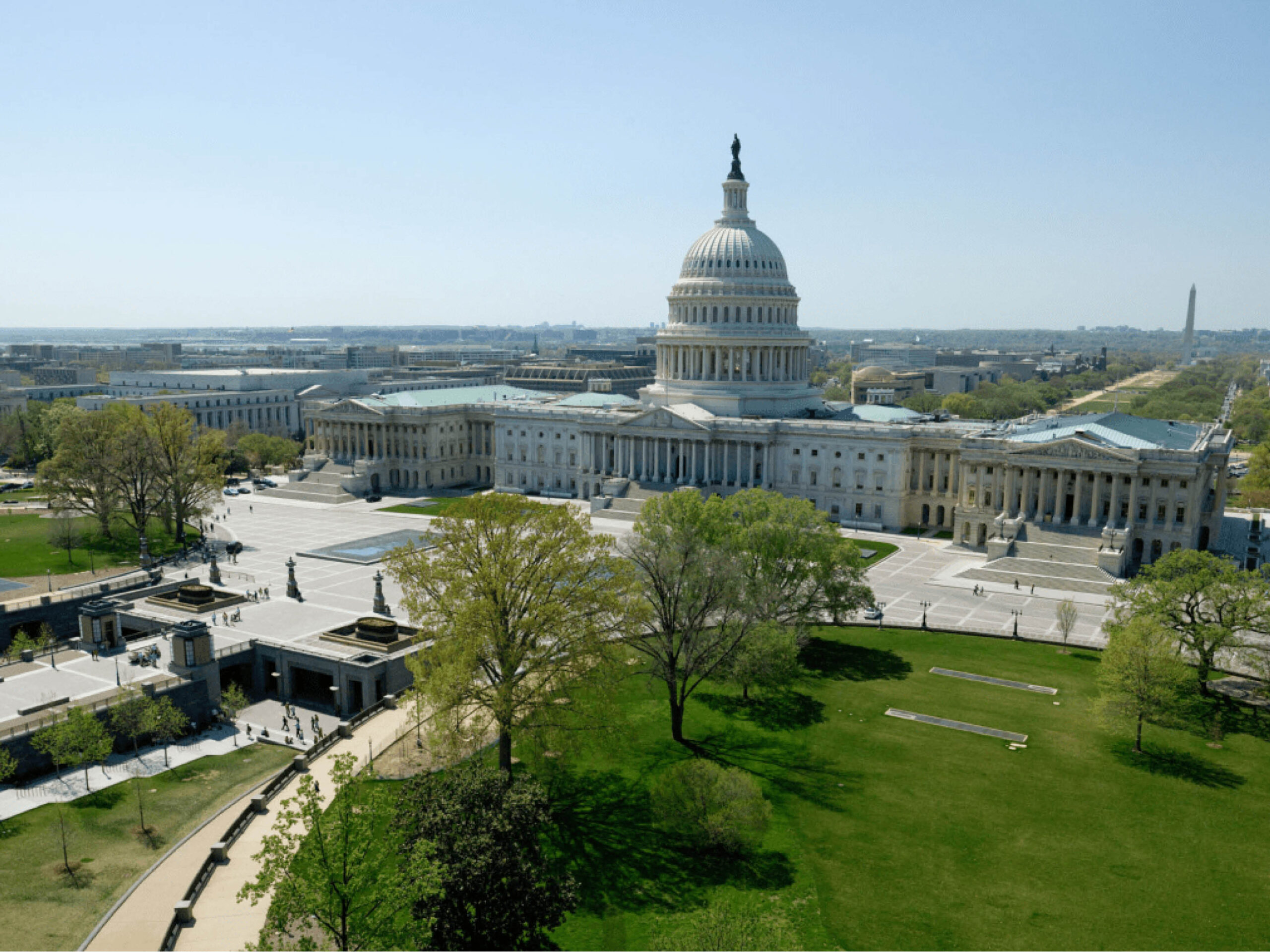
For decades, logging and mining lobbyists have argued that regulations requiring public input and transparency hold back progress, but on a recent trip to Washington, D.C., I told members of Congress a different story.
My message was simple: transparency, accountability, and public input actually make projects more efficient and lead to better outcomes. I pointed to the success of our local timber collaboratives as one example of how we see this happening in the southern Washington Cascades.
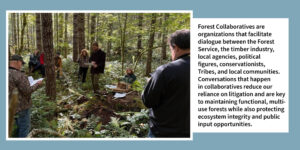
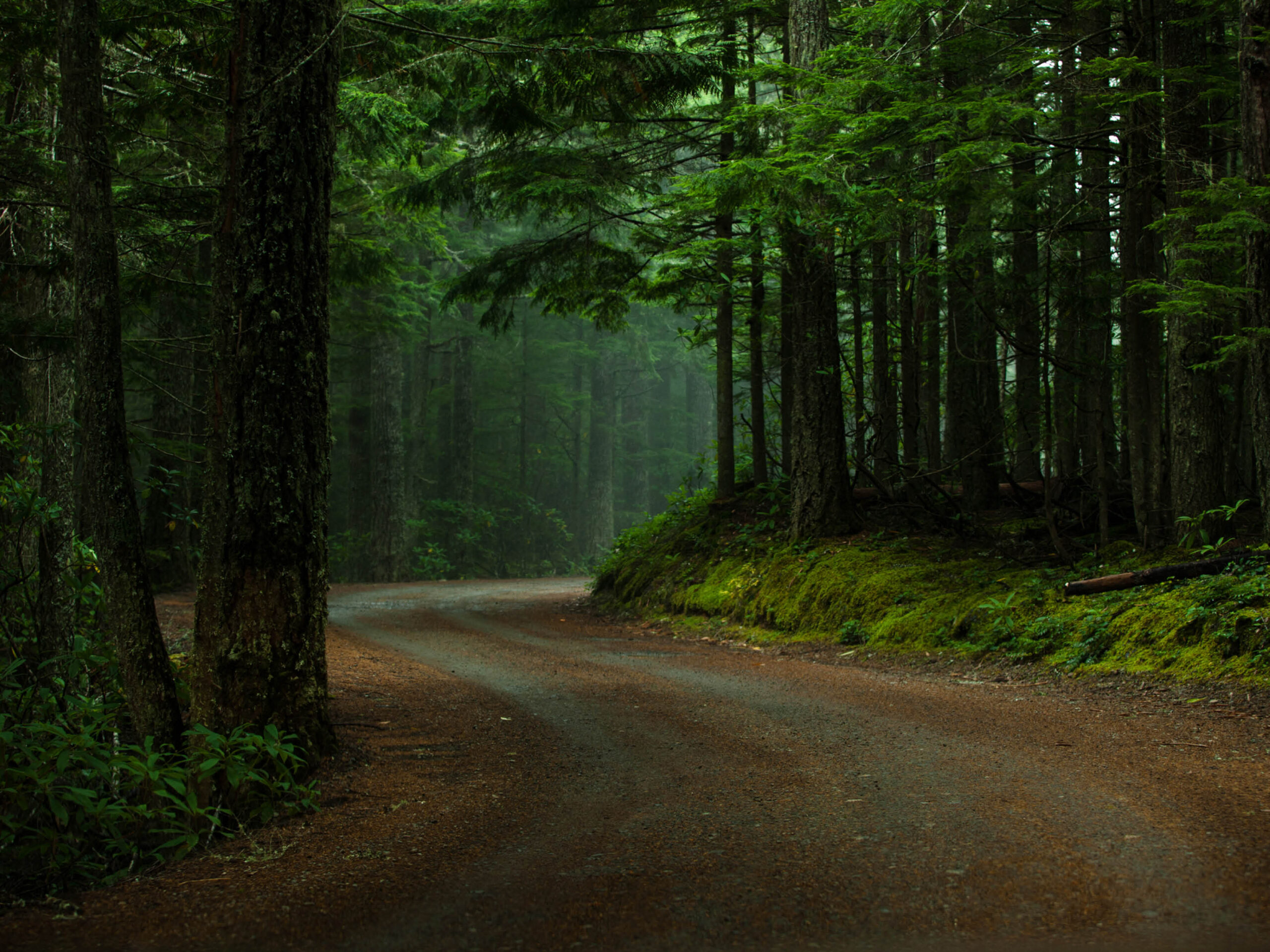
Since I offered my testimony, I’ve attended meetings of both of our local forest collaboratives and saw clear examples of how cooperative, transparent, and publicly accessible planning benefits our forests and communities.
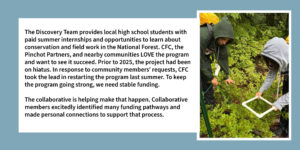
Last week, I worked with Pinchot Partners (focusing on the north part of the Gifford Pinchot NF) by supporting the collaborative’s strategic planning and engaging the community in a brainstorming session to support the Discovery Teams.
The next day, I joined the Southern Gifford Pinchot Collaborative (focusing on the south part of the Gifford Pinchot NF) for a tour of the Yakama Reservation to learn about Indigenous forestry practices. Collaborative members were able to see how the Tribe uses prescribed burns, and we observed the impacts of their fire recovery practices firsthand. We learned about methods used to support first foods and native re-planting efforts, and about how the Tribe is actively supporting the recovery of the threatened but ecologically and culturally critical white bark pine.
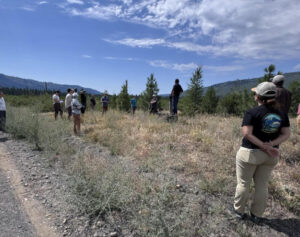
The relationships we’ve worked to develop as collaborative partners helped us identify new ways to keep an amazing program running and provided CFC, agency officials, and even representatives from the logging industry with a unique and impactful opportunity to learn firsthand about the techniques used by the Confederated Tribes and Bands of the Yakama Nation!
To me, these experiences are clear examples of the message I brought to D.C. In these times, when climate change and political forces are putting greater strains on our landscapes than ever before, relationships, co-management, and collaboration matter!
NEWS & UPDATES:
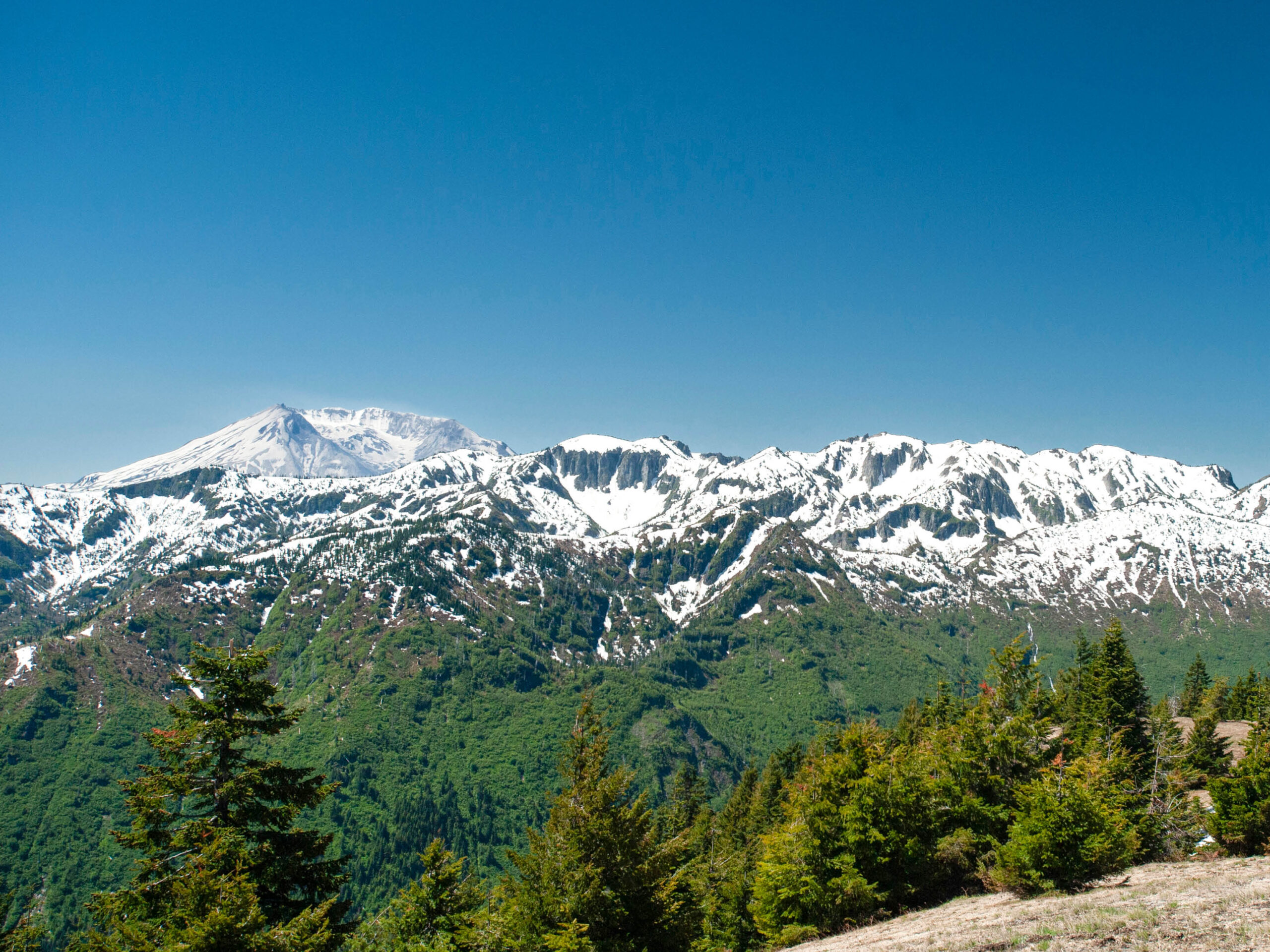
We’re bringing attention to the threat of mining at Mount St. Helens
Recently, we shared news of a new threat to ecosystems and communities. A Canadian mining corporation is working to develop a new mining project in the foothills of Mount St. Helens.
We are continuing to bring awareness about this rapidly developing issue. CFC’s Policy Manager recently spoke to Alejandra Guzman of Seattle’s Fox 13 News, and CFC’s staff provided information to support reporting published in Uplift Local.
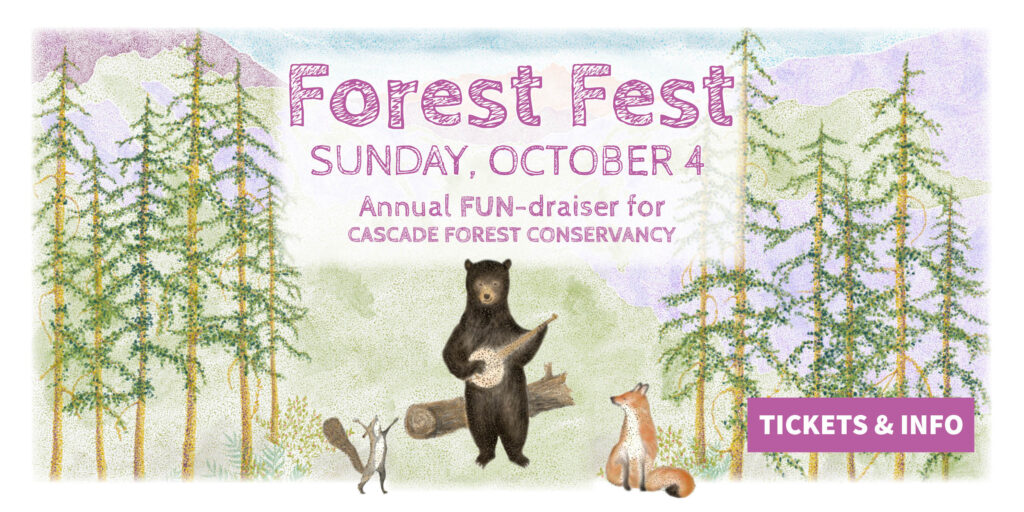
Save the date: FOREST FEST is coming on October 4
Sunday, October 4, 4:00 – 7:00 pm
Holocene | 1001 SE Morrison Street Portland, OR 97214

Forest Fest is a time to gather together to celebrate the beauty and diversity of our region while supporting the critical work needed to protect it.
In addition to games, music, raffles, and silent auctions, this year’s event will feature a conversation about our region’s unique human and geologic history with David B. Williams, author of IN THE RANGE OF FIRE & ICE: A Human and Natural History of Washington’s Cascades.
Ticket sales will begin next month!
Fire ban in effect in Gifford Pinchot National Forest
An unusually warm winter, drought, and historically low snowpack across the Pacific Northwest have created conditions that could fuel an especially severe fire season in 2026. The Gifford Pinchot National Forest put fire restrictions in place at the beginning of July.
Campfires, charcoal and pellet fires, smoking, and other activities are now prohibited on NF land. Human activities are responsible for the vast majority (90%) of wildfire ignitions, meaning that most destructive wildfires can be prevented. Help prevent new ignitions by checking and following current fire restrictions before you head out to enjoy your favorite places this summer.
Next month, CFC’s Executive Director, Policy Manager, and Director of Programs are headed to our nation’s capital with a simple message for elected officials and agency leaders: public lands must be managed with robust public input. We think that’s common sense. When the voices of the people who know their region best shape how our public lands are cared for, the outcomes are better for everyone.
It’s a message that we think needs to be heard now more than ever. The current administration has been systematically dismantling the public’s ability to effectively influence decision-making while routinely ignoring the input they do receive.
Help us make sure our message is heard by picking up your own “PUBLIC LANDS, PUBLIC INPUT” t-shirt today. All sales will support our upcoming trip and help us have important conversations with federal decision-makers.
BURN RESTRICTIONS
Signs of trouble and hope at McDonald Ridge
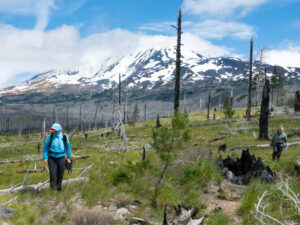
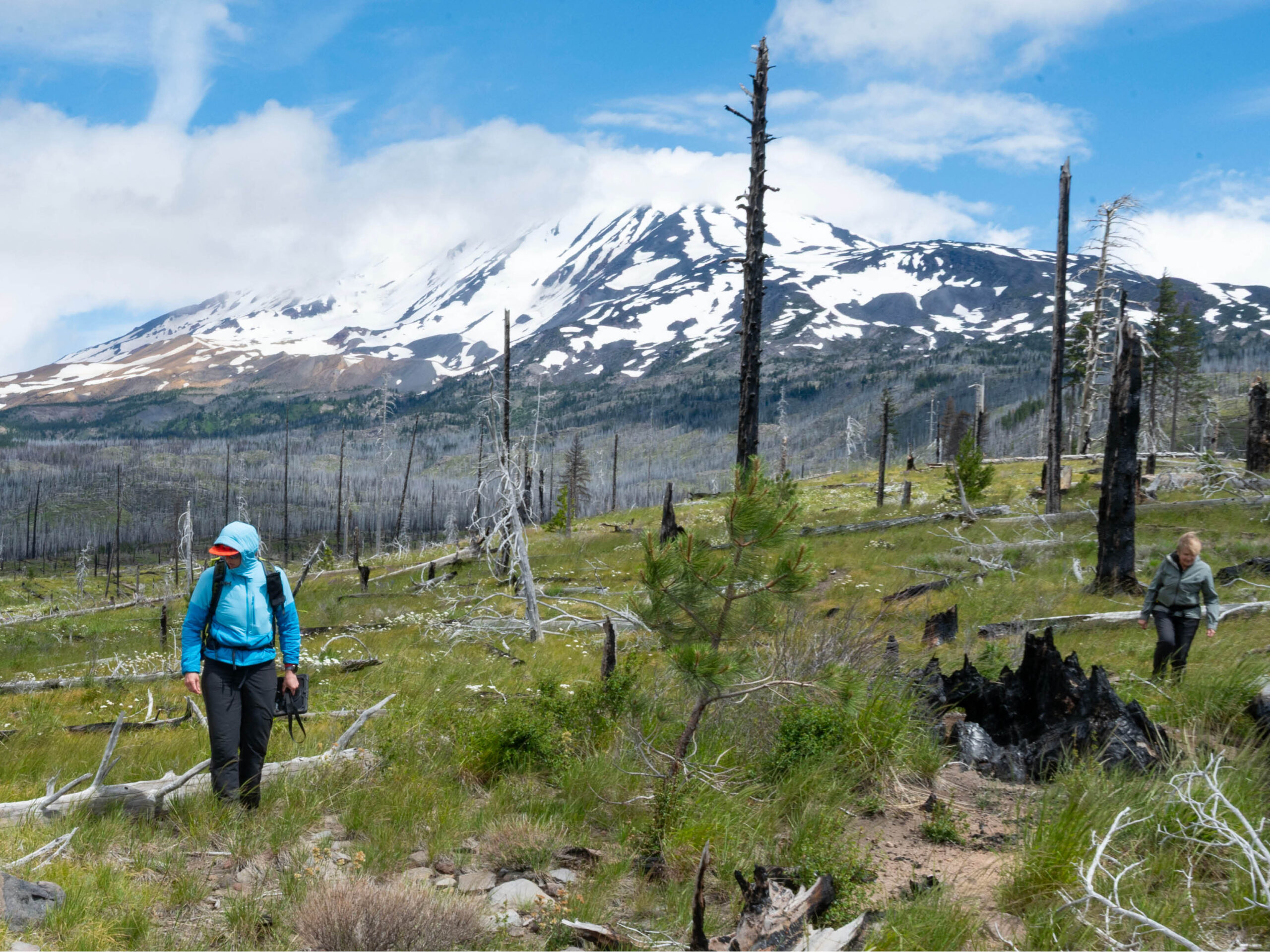
Cascade Forest Conservancy staff, volunteers, and Forest Service botanists recently conducted native plant surveys in wildfire-impacted forests beneath the slopes of Mount Adams.
There, we observed signs of climate change affecting our forests, but we also documented examples of how CFC and our community can make a positive impact.
LEARN MORE
Volunteers assisted with macroinvertebrate surveys

In June, volunteers joined us at 3 different restoration sites to survey for macroinvertebrates.
Despite their size, macroinvertebrates play a major role in aquatic habitats and provide insights into ecosystem health. These samples will provide information on water and habitat quality in stream reaches where we will be doing future restoration work.
Hundreds gathered at Lampreypalooza!
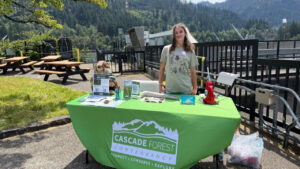
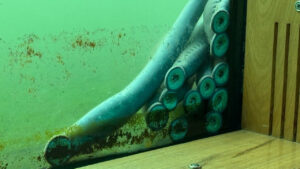
Hundreds of lamprey lovers attended Lampreypalooza in June! Hosted at Bonneville Dam, CFC joined local Tribes, fish and wildlife agencies, and other lamprey experts to celebrate and share the importance of Pacific lamprey with the public. Attendees got to watch adult Pacific lamprey show off their impressive climbing skills as they made their way through the fish passage structure at the dam. This is peak migration season, so if you’re passing by Bonneville Dam on the Oregon or Washington side, it’s well worth stopping to watch these fascinating fish on their journey upstream to spawn!
STORIES WE’RE WATCHING:
Environmental groups sue government to stop a big change to the Endangered Species Act